
What's Happening?
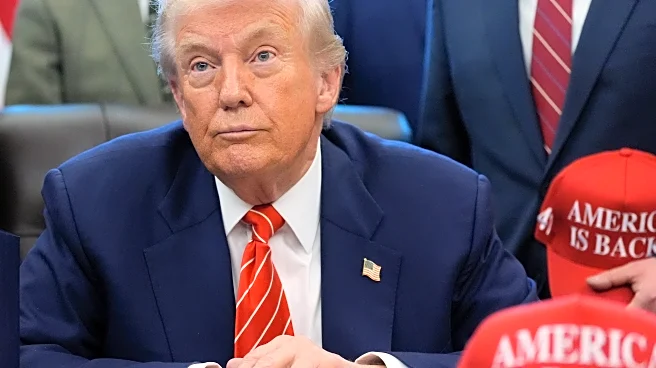
In his first year back in office, President Trump has significantly expanded executive power, raising concerns among scholars about the erosion of democratic norms in the United States. This expansion includes actions such as firing inspectors general,
sidelining Congress, and attacking the media to control information. These moves are seen as unprecedented in U.S. history, with some experts suggesting that they push the country towards authoritarianism. Despite these concerns, President Trump and his supporters argue that the Constitution allows for a strong presidency and that his actions reflect the mandate given by voters to implement substantial changes in government. While Trump remains popular with his base, his overall job performance is viewed unfavorably by most Americans. Critics hope that the upcoming midterm elections will serve as a check on his power.
Why It's Important?
The expansion of executive power under President Trump has significant implications for the balance of power in the U.S. government. By stretching the authority of the executive branch, Trump challenges the traditional checks and balances that are fundamental to American democracy. This shift could lead to a concentration of power in the presidency, potentially undermining the roles of Congress and the judiciary. The actions taken by the Trump administration, such as controlling media narratives and influencing the Department of Justice, could set precedents that future administrations might follow, further altering the democratic landscape. The potential for increased executive power raises concerns about accountability and transparency in government, impacting public trust and the effectiveness of democratic institutions.
What's Next?
As President Trump enters the second year of his term, the focus will likely be on how his administration continues to navigate the balance of power. The upcoming midterm elections could play a crucial role in determining the extent of congressional oversight on the executive branch. If the elections result in a shift in congressional power, it could lead to increased scrutiny and potential challenges to Trump's policies. Additionally, ongoing legal battles and public opinion will influence the administration's ability to maintain its current trajectory. Stakeholders, including political leaders, civil society groups, and the media, will continue to monitor and respond to the administration's actions, shaping the future of U.S. governance.