



What's Happening?
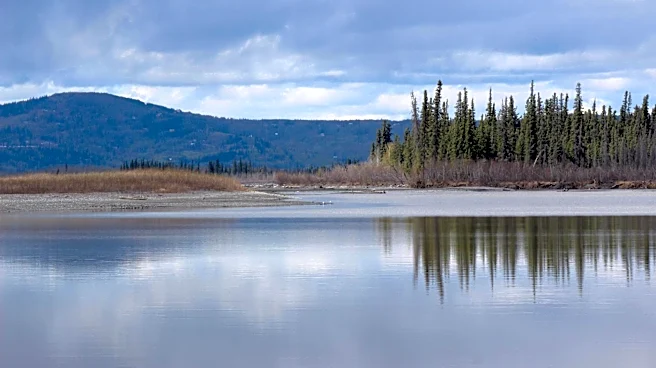
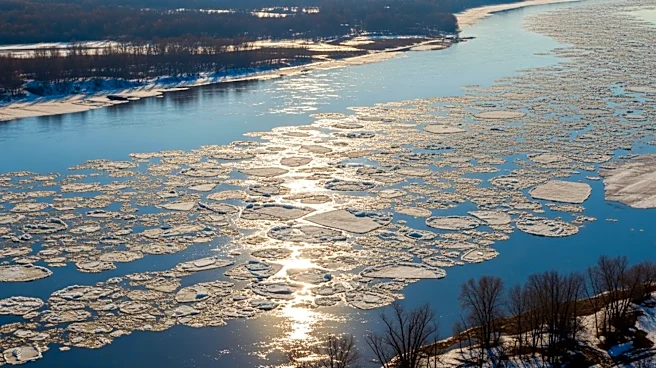
NASA's Earth Observatory has captured significant changes along the Kuskokwim River near Aniak, Alaska, as the region transitions from winter to spring. Images taken by the Landsat 9 satellite show the river's ice cover beginning to break up between April
21 and May 7, 2026. The breakup of river ice, a common spring occurrence, poses a risk of flooding in low-lying areas. The Alaska-Pacific River Forecast Center reported that the river ice was thick and covered in snow as of mid-April, supporting a 350-mile ice road that closed on April 10. By early May, the ice breakup had reached Aniak, causing a 21-mile ice jam upstream. Although the ice began to move downstream by May 7, the town remained at risk as ice jams formed downstream, prompting a flood watch on May 8. Water levels rose, affecting homes and businesses near the runway before receding two days later.
Why It's Important?
The ice breakup on the Kuskokwim River highlights the challenges faced by Alaskan communities during seasonal transitions. The risk of flooding due to ice jams can have significant impacts on local infrastructure, homes, and businesses. This event underscores the importance of monitoring and forecasting in mitigating flood risks. The situation in Aniak serves as a reminder of the broader implications of climate patterns and their effects on local environments. The potential for dynamic breakups, where rapid snowmelt meets intact ice, can lead to sudden and severe flooding, posing threats to safety and property. Understanding these patterns is crucial for developing effective response strategies and ensuring community resilience.
What's Next?
As the spring season progresses, continued monitoring of the Kuskokwim River and other Alaskan waterways will be essential to anticipate and manage potential flooding. Local authorities and residents will need to remain vigilant, especially in areas prone to ice jams and rapid water level changes. The Alaska-Pacific River Forecast Center will likely continue to provide updates and warnings as conditions evolve. Long-term, this event may prompt discussions on improving infrastructure and emergency preparedness in flood-prone regions, as well as exploring the impacts of climate variability on seasonal weather patterns.