



What's Happening?
U.S. Republican Representative Mario Díaz-Balart of Florida has publicly endorsed the formation of a parliamentary friendship group between Panama and Taiwan. This initiative, which received support via a video message from Díaz-Balart, marks a significant
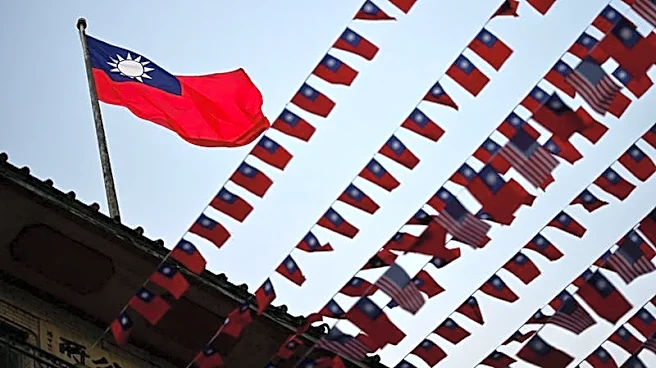
development in parliamentary diplomacy. The Panamanian National Assembly established this new channel for engagement with Taiwan, a decision with geopolitical weight given Panama's strategic location and the ongoing influence struggle between the United States and China. Díaz-Balart, known for his critical stance on China's expanding influence in Latin America, emphasized that Panama and Taiwan share principles of prosperity, freedom, and democracy. This move is particularly notable as it represents the most visible advancement in parliamentary relations between the two territories since Panama severed diplomatic ties with Taiwan and recognized the People's Republic of China in June 2017. The Panamanian legislative group aims to foster exchanges in areas such as trade, technology, innovation, and knowledge transfer, without altering Panama's official foreign policy or re-establishing diplomatic relations with Taipei.
Why It's Important?
The endorsement by U.S. Representative Mario Díaz-Balart elevates the Panama-Taiwan parliamentary friendship group beyond a mere ceremonial act, signaling Washington's implicit approval. This development is crucial in the broader context of the intensifying competition between the United States and China for economic, political, and strategic influence in Panama, particularly concerning the Panama Canal and other strategic assets. For the U.S., supporting such initiatives can be seen as a way to counter China's growing presence in Latin America and reinforce democratic alliances. For Taiwan, this parliamentary group offers a valuable avenue for international engagement and recognition, especially after losing official diplomatic ties with Panama. The initiative also highlights a potential shift in Panama's approach, as the country had previously begun to distance itself from some Chinese initiatives, including the Belt and Road Initiative. This move could strengthen Panama's ties with democratic nations and potentially open new economic and technological cooperation opportunities, benefiting both Panama and Taiwan, while also serving U.S. strategic interests in the region.
What's Next?
The formation of the Panama-Taiwan parliamentary friendship group is expected to lead to increased exchanges in trade, technology, innovation, and knowledge transfer between the two entities. While the initiative does not formally restore diplomatic relations or challenge the 'One China' principle, it institutionalizes contacts that Panamanian legislators have been developing through visits and meetings with Taiwanese officials. The key question remains whether this rapprochement will be confined to parliamentary diplomacy or evolve into a broader economic and political relationship with Taiwan. Major stakeholders, including political leaders in Washington and Beijing, will closely monitor the group's activities. Beijing is unlikely to ignore this development, as it directly challenges its narrative of isolating Taipei internationally. The Panamanian National Assembly has introduced a new element into the delicate geopolitical balance between China and the United States in Panama, and future actions by both the Panamanian executive branch and the U.S. Congress could further shape the trajectory of this relationship.
Beyond the Headlines
This parliamentary friendship group carries deeper implications beyond its immediate diplomatic scope. It underscores the growing trend of 'parliamentary diplomacy' as a tool for nations to maintain or forge relationships in complex geopolitical environments, especially when official diplomatic recognition is constrained. For Panama, it represents an internal debate about the balance of power between the executive and legislative branches regarding foreign relations, as the Panamanian Constitution reserves foreign policy conduct for the executive. The multipartisan composition of the group in Panama suggests a consensus within the legislature to re-engage with Taiwan, reflecting a potential desire to diversify international partnerships and reduce over-reliance on any single power. Ethically, it highlights the tension between national sovereignty in foreign policy and the influence of external powers like the U.S. in shaping these relationships. Culturally, it could foster greater understanding and cooperation between the peoples of Panama and Taiwan, driven by shared democratic values, even in the absence of formal state-to-state ties. This initiative could serve as a model for other nations navigating similar geopolitical pressures.