




What's Happening?
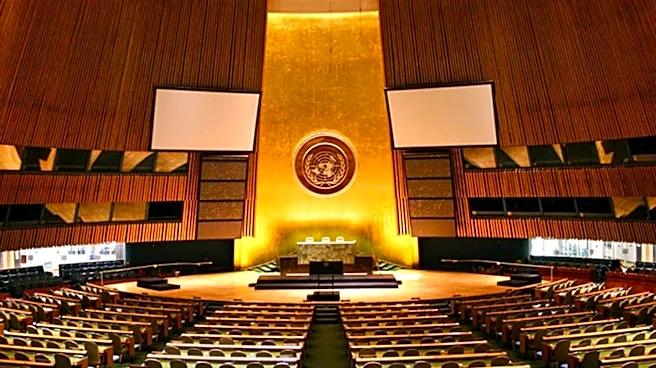
The General Assembly has adopted a political declaration focused on pandemic prevention, preparedness, and response. The declaration passed with 153 votes in favor, three against (Argentina, Israel, and the United States), and two abstentions (New Zealand
and Paraguay). This declaration was initially intended for approval by consensus at a high-level meeting on September 25, but objections from the United States and other nations prevented this. The adopted text is political and non-binding, advocating for enhanced national, regional, and international cooperation guided by science, equity, and human rights. It also acknowledges the World Health Organization (WHO) Pandemic Agreement from the previous year. WHO Director-General Tedros Adhanom Ghebreyesus welcomed the commitment from UN Member States, urging them to finalize negotiations on the Pathogen Access and Benefit Sharing (PABS) system annex, which is crucial for the WHO Pandemic Agreement to become international law. The PABS system outlines how countries would share samples and genetic data in exchange for a share of resulting vaccines, treatments, and diagnostics. Talks on this annex have stalled due to disagreements between developing countries and some high-income European nations, including the U.S.
Why It's Important?
The U.S. objection to the General Assembly's pandemic declaration highlights ongoing international disagreements regarding global health security and resource sharing. The lack of consensus, particularly from a major global power like the United States, could impede the effectiveness and universal adoption of future pandemic response frameworks. The stalled negotiations on the Pathogen Access and Benefit Sharing (PABS) system annex are particularly critical. This system is designed to ensure equitable access to vaccines, treatments, and diagnostics during a pandemic, which directly impacts global health equity and the ability to control outbreaks effectively. If the annex is not finalized, the WHO Pandemic Agreement cannot be opened for signature or enter into force as international law, potentially leaving the world less prepared for future health crises. The U.S. stance, citing 'divisive ideologies that lack definitional consensus' and references to ongoing annex negotiations, suggests a fundamental disagreement on the principles or practicalities of such a system. This could lead to a fragmented global response to future pandemics, where wealthier nations might secure resources more quickly, leaving developing countries vulnerable. The inability to achieve consensus on such a vital international health agreement underscores the challenges in establishing unified global strategies for public health.
What's Next?
The World Health Assembly, comprising the WHO’s 194 members, is scheduled to revisit the annex on pathogen access and benefit-sharing in May. This upcoming meeting will be crucial for determining the future of the WHO Pandemic Agreement. The ongoing standoff between developing countries and high-income nations, including the U.S., over the PABS system will need to be resolved for the agreement to move forward. Without a resolution, the agreement cannot be opened for signature, delaying its implementation as international law. The WHO will likely continue to advocate for the finalization of these negotiations to strengthen global pandemic preparedness. Member States will need to find common ground on the equitable sharing of pathogen samples, genetic data, and the resulting medical countermeasures. The outcome of these discussions will significantly influence the global capacity to respond to future pandemics and ensure a more coordinated and equitable distribution of resources. The U.S. position and its willingness to engage in further compromise will be a key factor in these upcoming negotiations.
Beyond the Headlines
The U.S. decision to vote against the General Assembly's pandemic declaration, along with other nations, reveals deeper geopolitical tensions and differing philosophies on global governance and resource allocation during crises. The U.S. objection, citing 'divisive ideologies' and ongoing negotiations, suggests a concern over sovereignty, intellectual property rights, or the economic implications of mandatory pathogen and benefit-sharing. This resistance could set a precedent for other international agreements, potentially weakening the authority of global health bodies like the WHO. The ethical dimension of equitable access to life-saving medical interventions during a pandemic is at the forefront of this debate. The failure to achieve consensus on the PABS system could exacerbate existing inequalities, where wealthier nations might prioritize their own populations, leading to a 'vaccine nationalism' scenario similar to what was observed during the COVID-19 pandemic. This situation highlights the ongoing struggle between national interests and the collective global good in addressing universal threats. The long-term shift could be towards more bilateral agreements or regional blocs for health security, rather than a truly unified global approach, if these fundamental disagreements persist.