





What's Happening?
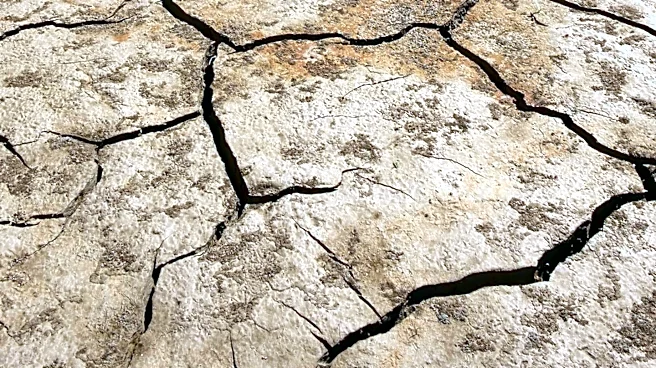
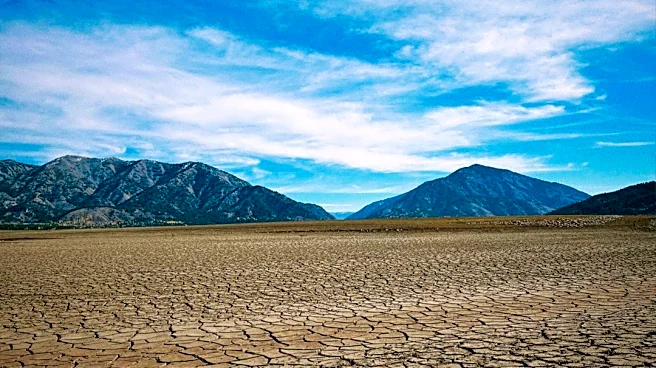
A study led by researchers at the Indian Institute of Technology Gandhinagar reveals that shifting sea-surface temperature patterns across the world's oceans prevent simultaneous global drought. Between 1901 and 2020, synchronized drought conditions affected
a maximum of 6.5 percent of global land at any given moment. Atmospheric currents dynamically redistribute moisture, meaning that a lack of rain in one continent often leads to heavy storm systems in another. This natural balance, however, is being steadily weakened by rising atmospheric temperatures. The research, which analyzed 120 years of global climate data, identified key regional hubs like Australia, South America, Southern Africa, Western North America, and the Middle East, which coordinate global moisture patterns. For instance, El Niño warming the tropical Pacific Ocean disrupts trade winds over eastern Australia and parts of Southeast Asia, while simultaneously carrying moisture towards coastal South America. This creates opposing regional reactions that keep major droughts out of sync, preventing widespread agricultural failures.
Why It's Important?
This oceanic mechanism is crucial for global food security and economic stability, as it prevents simultaneous widespread crop failures across major agricultural zones. The study highlights that while precipitation changes account for two-thirds of the long-term trend in global drought severity, rising air temperatures, or evaporative demand, account for the remaining one-third by directly pulling water from plants and soil. In mid-latitude regions, heat-driven evaporation is becoming increasingly dominant, creating stronger links between dry spells on different continents. When moderate drought strikes major farming regions, the risk of local crop yields dropping for staples like wheat, maize, rice, and soybeans is between 25 percent and 51 percent. The erosion of this natural protective buffer due to rising temperatures could lead to more frequent and severe synchronized droughts, impacting global food supplies and potentially causing significant economic disruptions and humanitarian crises.
What's Next?
The study suggests that while ocean currents currently fragment drought patterns, continuing temperature increases could gradually erode this protective buffer. As global thermal energy rises, atmospheric evaporation may eventually override the natural cooling and rainfall shifts that currently prevent half the world from drying out simultaneously. This implies a future where the U.S. and other nations could face more interconnected and severe drought conditions, leading to increased pressure on water resources, agricultural production, and disaster relief efforts. Policymakers and agricultural sectors will need to consider these long-term shifts in climate patterns to develop more resilient strategies for water management and food production. Further research into the interplay between oceanic cycles and rising temperatures will be critical to refine climate models and predict future drought scenarios more accurately.
Beyond the Headlines
The findings underscore the delicate balance within Earth's climate system and the profound impact of rising global temperatures. Beyond immediate agricultural concerns, a breakdown in the oceanic mechanisms that prevent synchronized droughts could have far-reaching geopolitical implications. Competition for dwindling water and food resources could intensify, potentially leading to increased regional conflicts and mass migrations. The study also implicitly calls for a re-evaluation of current climate mitigation strategies, emphasizing the need for more aggressive action to curb greenhouse gas emissions and limit global warming. The long-term shift towards heat-driven evaporation highlights a fundamental change in how droughts manifest, moving beyond simple precipitation deficits to a more complex interaction with atmospheric thermodynamics. This necessitates a holistic approach to climate adaptation, integrating water conservation, sustainable agricultural practices, and international cooperation.