
What's Happening?
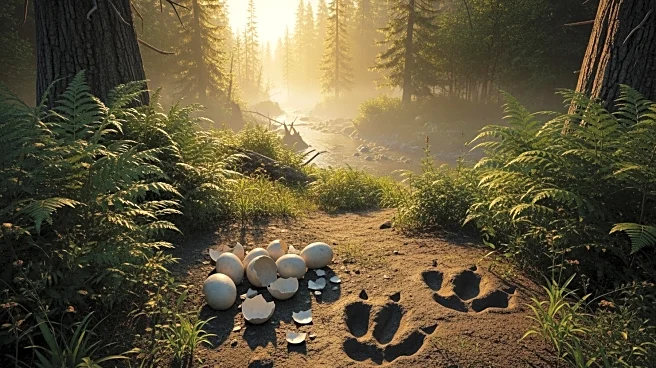
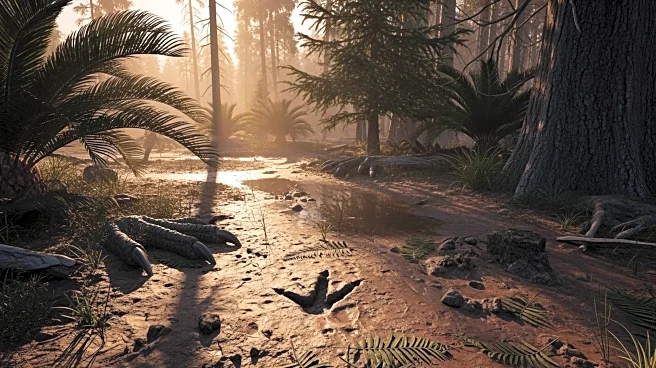
New research has uncovered that baby sauropods, including species like Brachiosaurus, were common prey for meat-eating dinosaurs during the Jurassic Period. The study, conducted at the Dry Mesa Dinosaur
Quarry in Colorado, reconstructed the food web of the ecosystem, revealing that young sauropods were frequently hunted due to their abundance and vulnerability. The ecosystem was rich with life, featuring various sauropods, meat-eating dinosaurs, and other species. The research highlights that while adult sauropods relied on their size and herd behavior for protection, their young were left to fend for themselves, making them easy targets for predators.
Why It's Important?
This study provides significant insights into the dynamics of prehistoric ecosystems, particularly the predator-prey relationships that existed millions of years ago. Understanding these interactions helps paleontologists reconstruct ancient environments and the evolutionary pressures that shaped the development of species. The findings also underscore the importance of juvenile sauropods in the food chain, offering a clearer picture of the ecological roles different species played. This knowledge contributes to broader scientific understanding of biodiversity and ecosystem function during the Jurassic Period.