



What's Happening?
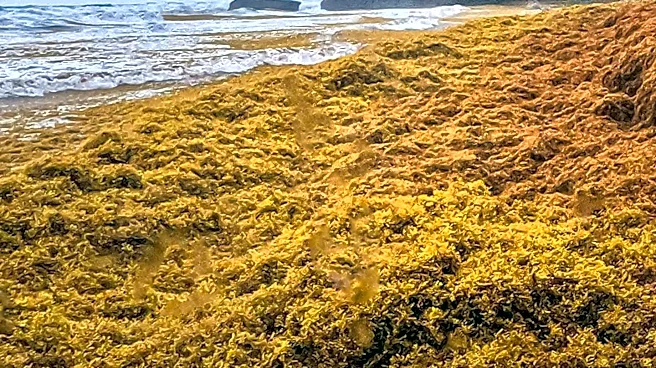
NASA's PACE satellite has recorded significant growth in Sargassum, a type of brown algae, in the tropical Atlantic Ocean. The Sargassum Belt, which stretches from West Africa to the Gulf of Mexico, reached its second-highest level in June 2026. The Caribbean
Sea and Gulf of Mexico saw record-high amounts of Sargassum, with the algae impacting marine life and coastal communities. While Sargassum provides habitat and oxygen in moderate amounts, excessive growth can harm marine ecosystems and affect tourism due to its decomposition releasing hydrogen sulfide.
Why It's Important?
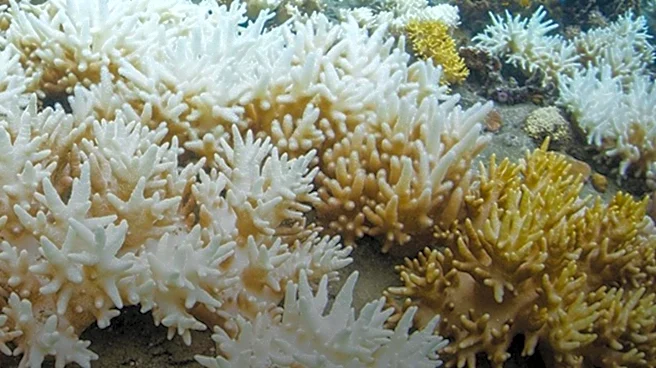
The proliferation of Sargassum poses environmental and economic challenges. It can disrupt marine ecosystems by suffocating marine life and damaging coral reefs. For coastal communities, the presence of Sargassum can deter tourism, impacting local economies. The situation highlights the need for effective monitoring and management strategies to mitigate the negative effects of Sargassum blooms. Understanding the factors driving this growth, such as ocean warming and nutrient sources, is crucial for developing long-term solutions.
What's Next?
Continued monitoring by NASA and other scientific organizations will be essential in tracking Sargassum growth and its impacts. Efforts to manage and mitigate the effects of Sargassum may involve developing new technologies and strategies for removal and disposal. Collaboration between governments, researchers, and local communities will be key in addressing the challenges posed by Sargassum blooms. Further research into the causes of Sargassum proliferation will help inform policy and management decisions.