



What's Happening?
A Missouri jury has sided with Monsanto in the first Roundup liability trial held since the U.S. Supreme Court's June decision regarding failure-to-warn claims. The verdict, delivered on October 29 in the case of Theresa Aretino, et al. v. Monsanto Company,
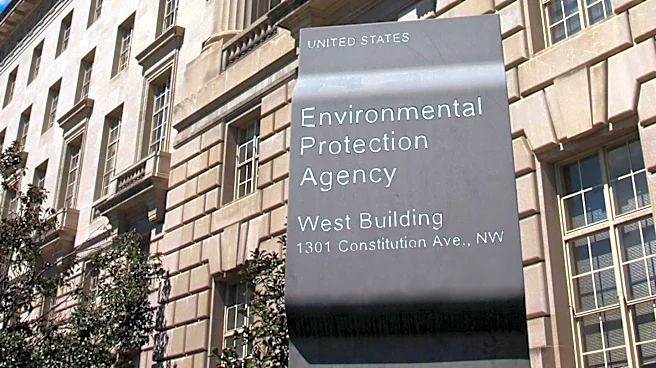
took place in the 21st Judicial Circuit Court of Missouri. This trial marks a significant shift from previous Roundup cases, as plaintiffs were unable to pursue state-law failure-to-warn claims. The Supreme Court's ruling in Monsanto Co. vs. Durnell established that the Federal Insecticide, Fungicide, and Rodenticide Act (FIFRA) preempts such claims, meaning companies cannot be required to add cancer warnings to labels that are not approved by the federal Environmental Protection Agency (EPA). Consequently, the plaintiffs in this Missouri case focused their arguments on allegations that Roundup was defectively designed and that Monsanto inadequately tested the pesticide's formulation, as well as minimizing research that suggested potential cancer risks. The trial involved conflicting scientific assessments, including the EPA's stance that glyphosate is unlikely to cause cancer and the International Agency for Research on Cancer's classification of the chemical as a probable human carcinogen.
Why It's Important?
This verdict is highly significant for Monsanto and the broader agricultural chemical industry, as it represents a successful defense against Roundup liability claims in a post-Supreme Court legal landscape. The preemption of state-law failure-to-warn claims, as established by the Supreme Court, fundamentally alters the legal strategy for plaintiffs seeking damages related to glyphosate exposure. This ruling could deter future lawsuits based on similar failure-to-warn arguments, potentially reducing Monsanto's legal exposure and financial liabilities. For consumers and public health advocates, the outcome underscores the ongoing debate and differing scientific opinions regarding the carcinogenicity of glyphosate. The EPA's position that glyphosate is not likely to cause cancer contrasts with the International Agency for Research on Cancer's classification, creating a complex environment for public understanding and regulatory action. The focus of the trial on design defect and inadequate testing claims, rather than labeling, indicates a new avenue for legal challenges against pesticide manufacturers, highlighting the importance of product development and research transparency.
What's Next?
The plaintiffs in the Theresa Aretino, et al. v. Monsanto Company case have a 30-day window to file any post-trial motions following the October 29 verdict. This period will determine if they seek to challenge the jury's decision or pursue further legal avenues. The outcome of these potential motions will be closely watched by both legal experts and stakeholders in the agricultural and chemical industries. This Missouri verdict is likely to influence the strategies of both plaintiffs and defendants in ongoing and future Roundup litigation across the United States. With the failure-to-warn claims largely curtailed by the Supreme Court's ruling, future cases will likely continue to concentrate on allegations of defective design and insufficient testing. The legal precedent set by this trial could encourage Monsanto to maintain its defense strategy, while plaintiffs' attorneys may need to refine their arguments to focus more heavily on product design and scientific evidence of harm, independent of labeling issues. The ongoing scientific debate surrounding glyphosate's safety will also continue to be a critical factor in any subsequent legal proceedings and public discourse.
Beyond the Headlines
The Missouri jury's decision extends beyond the immediate legal implications for Monsanto, touching upon broader issues of federal preemption in product liability cases and the influence of scientific consensus (or lack thereof) in legal proceedings. The Supreme Court's interpretation of FIFRA to preempt state-level failure-to-warn claims highlights a significant power dynamic between federal and state regulatory authority, potentially limiting states' abilities to impose stricter labeling requirements than those set by federal agencies. This could have long-term implications for consumer protection and public health advocacy, as it centralizes authority over product warnings at the federal level. Furthermore, the trial's emphasis on competing scientific assessments regarding glyphosate's carcinogenicity underscores the challenge of translating complex scientific data into legal judgments. The differing conclusions from the EPA and the International Agency for Research on Cancer illustrate the difficulty in establishing a definitive scientific consensus, which can then be leveraged in court. This case may prompt further scrutiny into how scientific evidence is presented, interpreted, and weighed in product liability litigation, particularly when there are conflicting expert opinions from reputable organizations. The outcome could also influence future legislative efforts to clarify or amend federal preemption laws related to product safety and labeling.