
What's Happening?
Santa Clara Mayor Lisa Gillmor has expressed concerns over potential Immigration and Customs Enforcement (ICE) presence at the upcoming Super Bowl LX, scheduled to take place at Levi's Stadium in Santa Clara,
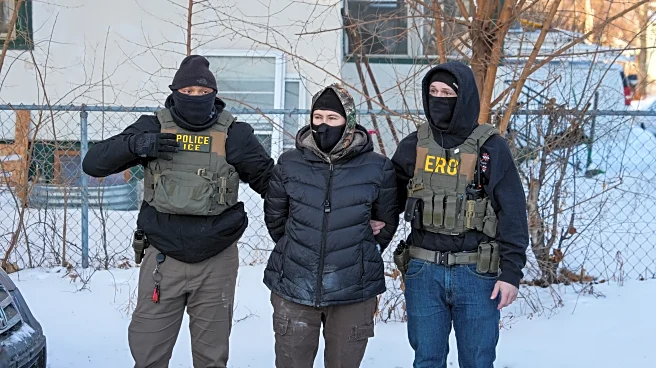
California. The Trump administration has been threatening to deploy ICE agents to the event, creating anxiety among local officials and the community. This comes in the wake of recent incidents involving ICE agents, including the controversial killings of two individuals in Minneapolis. The announcement of Puerto Rican musician Bad Bunny headlining the halftime show, which will be performed entirely in Spanish, has further fueled tensions. Bad Bunny has been vocal against ICE, criticizing the administration during his Grammy acceptance speech. The Department of Homeland Security has confirmed a visible presence at the event, but local officials emphasize that their focus is on safety and not immigration enforcement.
Why It's Important?
The potential deployment of ICE at the Super Bowl highlights ongoing tensions surrounding immigration enforcement in the U.S. The presence of federal agents at such a high-profile event could lead to heightened fears among immigrant communities and disrupt the celebratory atmosphere. The situation underscores the broader debate over immigration policies and the militarization of federal agencies under the Trump administration. The involvement of a prominent artist like Bad Bunny, who has a significant following, brings additional attention to the issue, potentially influencing public opinion and policy discussions. The outcome of this situation could impact future collaborations between local law enforcement and federal agencies at major events.
What's Next?
As the Super Bowl approaches, local officials and law enforcement agencies are preparing for potential protests and heightened security measures. The Santa Clara Police Department is leading public safety planning, emphasizing coordination with federal and regional partners. Community leaders and activists are likely to organize demonstrations to voice their opposition to ICE's presence. The response from the public and the actions of federal agencies during the event will be closely monitored, potentially influencing future policy decisions and community relations. The situation may also prompt discussions on the role of federal agencies in local events and the balance between security and civil liberties.