

What's Happening?
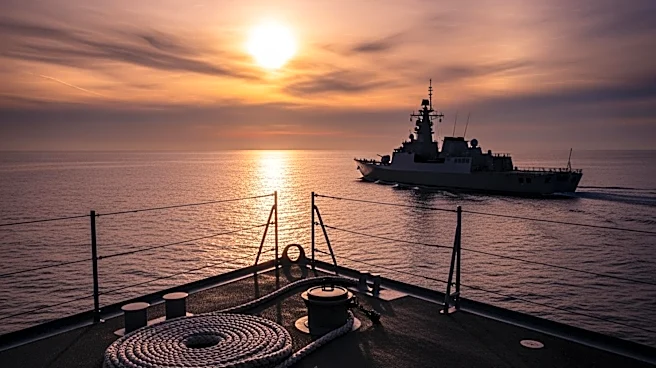
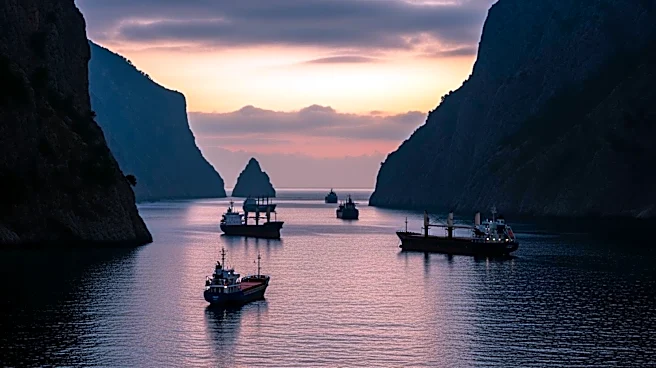
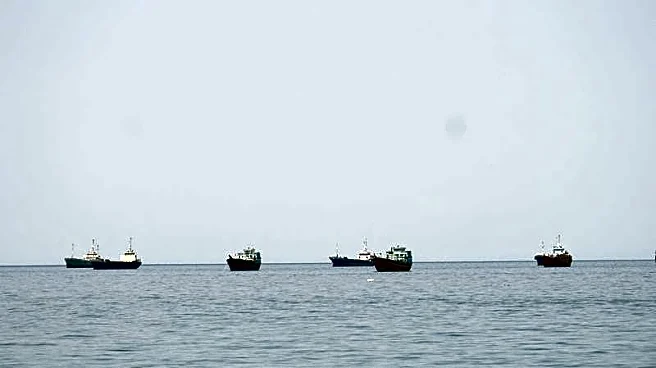
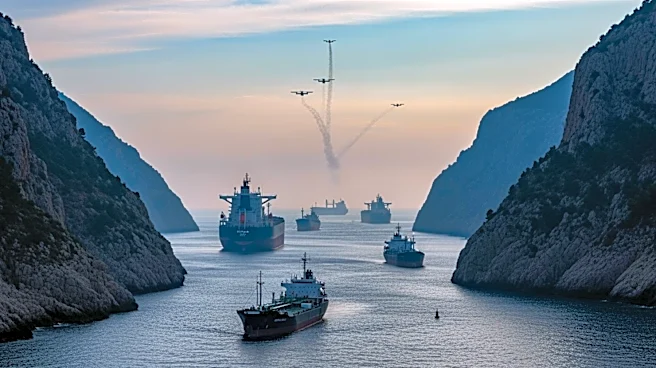
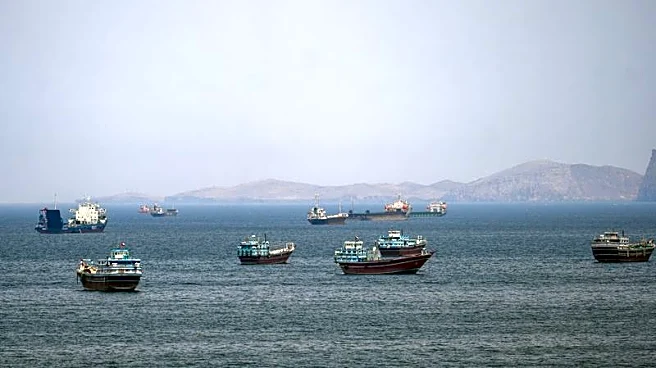
Approximately 20,000 seafarers have been stranded in the Persian Gulf due to ongoing conflict and attacks that have effectively closed the Strait of Hormuz. The situation has been exacerbated by sightings of drones and missile interceptions, creating
a tense environment for the crews. The conflict, primarily involving the U.S. and Iran, has led to a significant reduction in the number of vessels able to transit the strait, which is a critical passage for global oil and liquefied natural gas shipments. The blockade of Iranian ports by the U.S. continues despite a shaky ceasefire, and Iran has responded by firing on ships and seizing vessels. The situation has left many sailors facing shortages of food and water, with communication disruptions adding to their distress.
Why It's Important?
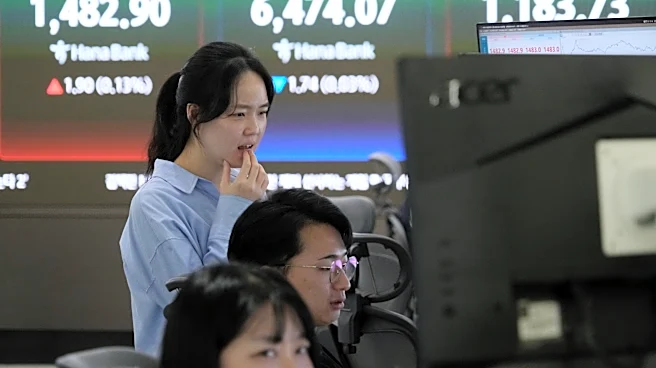
The closure of the Strait of Hormuz has significant implications for global trade, particularly in the energy sector, as the strait is a vital conduit for oil and gas shipments. The disruption affects not only the shipping industry but also global energy markets, potentially leading to increased oil prices and economic instability. The situation highlights the vulnerability of global supply chains to geopolitical conflicts and the critical role of seafarers in maintaining these supply lines. The ongoing conflict and the blockade have also raised concerns about the safety and welfare of the stranded sailors, many of whom are from countries like India, which is a major supplier of maritime labor.
What's Next?
The international community, including organizations like the International Maritime Organization, is calling for the establishment of a safe corridor for commercial vessels in the Strait of Hormuz. However, the ongoing conflict and the presence of mines and other threats make safe passage challenging. The U.S. has indicated it will continue efforts to clear mines and ensure the safety of vessels, but the situation remains volatile. The resolution of the conflict and the reopening of the strait are crucial for the resumption of normal shipping operations and the safe return of the stranded sailors.
Beyond the Headlines
The current crisis underscores the broader geopolitical tensions in the region and the potential for such conflicts to disrupt global trade. It also raises questions about the preparedness of the shipping industry to handle such crises and the need for better support systems for seafarers caught in conflict zones. The situation may lead to long-term changes in shipping routes and strategies to mitigate risks associated with geopolitical instability.