







What's Happening?
NASA is set to launch a new type of gamma-ray sensor, known as AstroPix, as part of its Fly Foundational Robots mission in late 2027. These sensors are designed to measure gamma rays between 20,000 and 700,000 electron volts, a range where current detectors
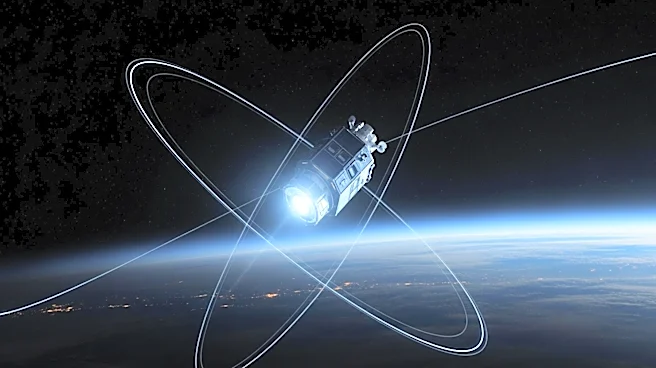
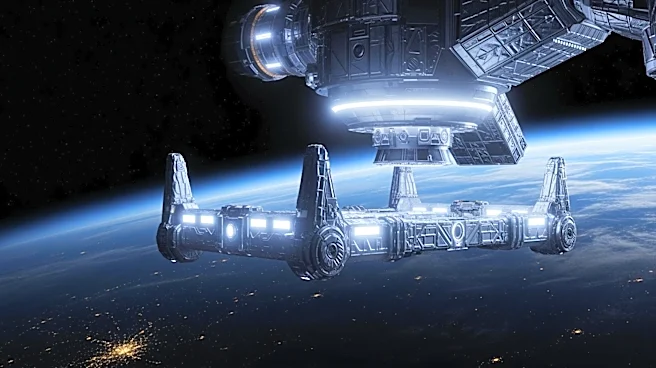
are less sensitive. The AstroPix technology aims to bridge the gap in observing gamma-ray bursts and the glow from massive, distant galaxies powered by black holes. The mission will also demonstrate robotic servicing capabilities in orbit, with AstroPix being part of a technology demonstration payload. The sensors, developed at NASA's Goddard Space Flight Center, function similarly to cellphone camera sensors but are sensitive to gamma-ray light. The mission will be hosted aboard a spacecraft provided by Astro Digital, with a robotic arm supplied by Rocket Lab Robotics.
Why It's Important?
The development and deployment of AstroPix sensors represent a significant advancement in space observation technology. By improving the sensitivity of gamma-ray detection, NASA can enhance its understanding of cosmic phenomena such as gamma-ray bursts and active galaxies. This could lead to new insights into the processes that drive these powerful cosmic events. Additionally, the mission's focus on robotic servicing in orbit could pave the way for more cost-effective satellite maintenance and upgrades, potentially extending the lifespan and capabilities of space instruments. This aligns with NASA's broader goals of advancing space technology and exploration capabilities.
What's Next?
The AstroPix team is working towards delivering their hardware by September, which will then be integrated into the Fly Foundational Robots payload. The mission will test the AstroPix sensors' performance in orbit, providing valuable data for future science missions. The success of this mission could lead to the integration of AstroPix technology in other space missions, enhancing the scientific community's ability to study high-energy cosmic events. The demonstration of robotic servicing capabilities could also influence future satellite design and mission planning, emphasizing modularity and in-orbit maintenance.