



What's Happening?
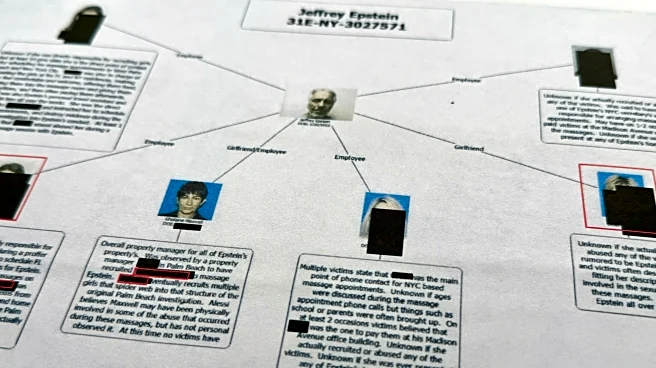
The U.S. Department of Justice (DOJ) has released heavily redacted files related to Jeffrey Epstein, following a new law passed by Congress mandating the disclosure. The redactions have led to public outcry and accusations of a cover-up, as many pages
are entirely blacked out, preventing victims and the public from accessing potentially crucial information. The files include references to President Trump and former President Bill Clinton, with some details about Trump's past plane travel with Epstein being unredacted. The DOJ has defended the redactions, citing the need to protect victims' identities and ongoing investigations. However, critics argue that the extent of the redactions goes beyond what is necessary, raising questions about the DOJ's transparency.
Why It's Important?
The release of these files is significant as it touches on issues of transparency and accountability within the U.S. government, particularly concerning high-profile cases involving public figures. The redactions have fueled suspicions of a cover-up, potentially undermining public trust in the DOJ. This situation also highlights the challenges of balancing privacy and transparency, especially in cases involving sensitive information. The controversy could lead to increased scrutiny of the DOJ's handling of such cases and calls for legislative changes to ensure greater transparency in the future.
What's Next?
The DOJ is required to justify each redaction in a report to Congress, which may provide further clarity on the reasons behind the extensive blackouts. This report could either alleviate or exacerbate public concerns, depending on the explanations provided. Additionally, the ongoing release of documents over the next few weeks may reveal more information, potentially impacting public perception and legal proceedings related to the Epstein case. Lawmakers and advocacy groups are likely to continue pushing for greater transparency and accountability from the DOJ.