




What's Happening?
Marine veteran T.J. Swenson Jr. was awarded the Madeline "Amy" Sweeney Award for Civilian Bravery on Friday, an honor named after a heroic flight attendant from 9/11. Swenson received the award for his actions during a shooting incident on Memorial Drive
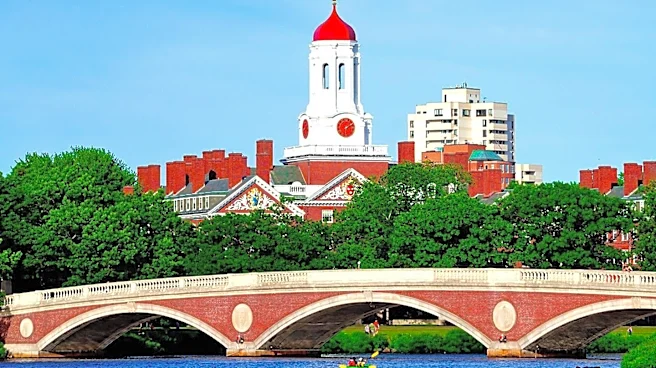
in Cambridge, Massachusetts, earlier this year on May 11. During the incident, an active shooter fired more than 70 rounds from a semi-automatic weapon at cars and people. Swenson, who was driving on Memorial Drive at the time, stopped his vehicle, exited, and helped individuals move to safety. He then confronted the shooter alongside Massachusetts State Police Trooper Landon Veney. Rachael Lemire-Saveriano, who was present during the shooting and nominated Swenson for the award, stated that Swenson put himself in harm's way to allow others to escape. Massachusetts State Police Col. Geoffrey Noble praised Swenson's actions, highlighting his reliance on his Marine training. Governor Maura Healey also commented that the tragedy could have been far worse without the bravery of Swenson, Trooper Veney, and others.
Why It's Important?
This recognition underscores the critical role of civilian courage and preparedness in mitigating the impact of violent incidents. The Madeline "Amy" Sweeney Award, presented annually on September 11, serves as a poignant reminder of the sacrifices made by ordinary citizens in extraordinary circumstances, drawing a direct parallel to the heroism displayed during the 9/11 attacks. Swenson's actions highlight the potential for individuals, particularly those with military training, to act decisively in high-stress situations, potentially saving lives. The incident also brings attention to the ongoing issue of gun violence in public spaces and the immediate dangers faced by communities. The involvement of both a civilian and law enforcement in confronting the shooter demonstrates a collaborative effort in crisis response, emphasizing the importance of both individual initiative and coordinated emergency services. This event could influence public discourse on civilian intervention, gun control measures, and community safety protocols.
What's Next?
While T.J. Swenson Jr. has been honored for his bravery, he has chosen not to speak publicly about the incident due to the ongoing criminal case against the shooter. The suspect in the Memorial Drive shooting has been indicted on over 40 criminal charges and was in court recently. The legal proceedings will continue to unfold, determining the consequences for the individual responsible for the violence. The recognition of Swenson's actions may prompt further discussions within Massachusetts and potentially other states regarding civilian training for active shooter scenarios and the legal frameworks surrounding self-defense and intervention. The annual presentation of the Madeline "Amy" Sweeney Award will continue to highlight acts of civilian bravery, potentially inspiring others to act courageously in future emergencies. The incident may also lead to reviews of security measures and emergency response protocols in public areas like Memorial Drive.
Beyond the Headlines
The story of T.J. Swenson Jr.'s bravery extends beyond the immediate act of heroism, touching upon deeper societal implications. His actions, rooted in his Marine training, highlight the valuable skills and mindset that veterans bring back to civilian life, often making them assets in community safety. The award itself, named after Madeline "Amy" Sweeney, a flight attendant who provided critical information during the 9/11 attacks, connects contemporary acts of courage to historical moments of national tragedy, reinforcing a narrative of resilience and civic duty. This event also subtly contributes to the ongoing national conversation about the role of armed citizens in self-defense and public safety, as Swenson was legally permitted to carry a firearm. The emotional impact on those present, like Rachael Lemire-Saveriano, underscores the profound psychological toll of such events and the lasting gratitude towards those who intervene. It also raises questions about the collective responsibility of communities to foster environments where individuals feel empowered and equipped to act in crises, while also ensuring robust law enforcement and mental health support systems.