
What's Happening?
An amateur astronomer from Quebec, Joël Lapointe, has potentially discovered one of the largest meteorite impact craters in recent years using Google Maps. While planning a trip through the Côte-Nord region,
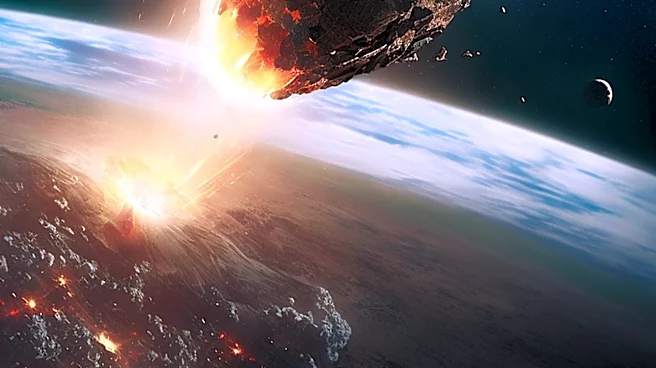
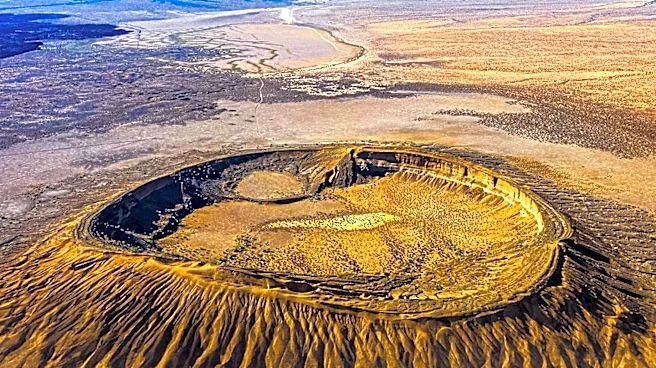
Lapointe noticed a circular depression resembling a meteorite crater. The formation, approximately 15.5 miles across, is located about 62 miles north of Magpie. After failing to find it in existing crater databases, Lapointe contacted researchers, leading to an investigation that confirmed the structure as a meteorite impact site. Named Uhackatik, the crater is believed to have been formed by a meteorite impact around 390 million years ago. Researchers plan to present their findings at the Meteoritical Society's Annual Meeting in Germany.
Why It's Important?
The discovery of the Uhackatik crater is significant as it provides a rare opportunity to study a well-preserved impact site. Such craters are uncommon due to erosion and geological activity that erase evidence over time. Understanding these impacts helps scientists learn how meteorite collisions have shaped Earth and offers comparisons for craters on other celestial bodies like the moon and Mars. This discovery highlights the potential for citizen scientists to contribute to significant scientific findings, encouraging public engagement in scientific exploration.
What's Next?
Researchers are continuing to analyze rock samples from the site for further evidence of the impact. The findings will be presented at the Meteoritical Society's Annual Meeting, which could lead to further studies and collaborations. The scientific community may focus on the implications of this discovery for understanding Earth's geological history and the frequency of such impacts. The involvement of amateur astronomers like Lapointe may inspire more public participation in scientific research.
Beyond the Headlines
The discovery underscores the importance of interdisciplinary collaboration and the role of technology in modern scientific research. It also raises questions about the preservation of geological sites and the potential for undiscovered craters worldwide. The involvement of indigenous communities in naming the crater highlights the cultural significance and the need for inclusive scientific practices.