
What's Happening?
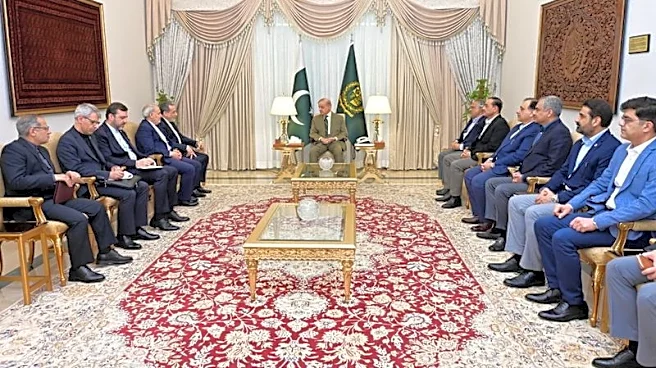
Negotiations in Pakistan aimed at addressing tensions between the United States and Iran have been put on hold. The talks were expected to build on previous discussions between the two nations. However,
the absence of U.S. envoys, coupled with the departure of Iran's top diplomat from Islamabad, has stalled progress. The situation is further complicated by recent U.S. actions, including the blockade of Iranian ports, which were initiated in response to Iran's control over the strategic Strait of Hormuz. This development has led Iranian officials to question the reliability of the U.S. as a negotiating partner.
Why It's Important?
The stalled talks highlight the ongoing volatility in U.S.-Iran relations, which have significant implications for regional stability and global oil markets. The Strait of Hormuz is a critical chokepoint for global oil shipments, and any disruption could lead to increased oil prices and economic instability. The absence of U.S. envoys at the talks may signal a lack of diplomatic engagement, potentially escalating tensions further. This situation underscores the challenges in achieving diplomatic resolutions in the Middle East, affecting international relations and economic stakeholders worldwide.
What's Next?
The future of U.S.-Iran negotiations remains uncertain. Potential next steps could involve renewed diplomatic efforts to bring both parties back to the table. The international community, including allies and regional powers, may play a role in mediating the situation to prevent further escalation. Monitoring the actions of both the U.S. and Iran in the coming weeks will be crucial in assessing the likelihood of resumed talks and the potential for easing tensions.