





What's Happening?
Hundreds of Libyan protesters have once again closed the United Nations High Commissioner for Refugees (UNHCR) office in Tripoli, blocking staff entry and welding shut the gates. This action, reported by local media and video footage, stems from concerns
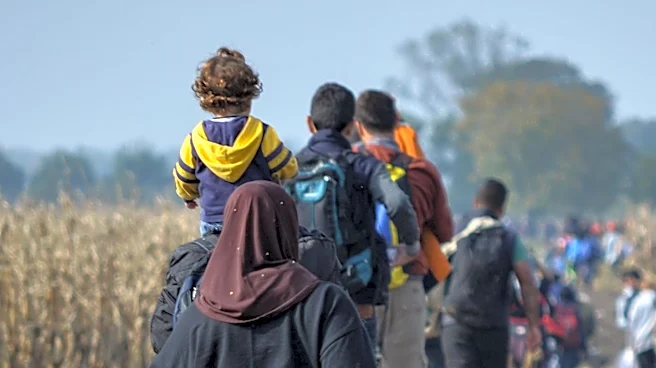
among the 'No to Settlement' movement regarding the alleged 'permanent settlement' of undocumented migrants in Libya. A similar incident occurred in June. The UN Support Mission in Libya (UNSMIL) has denied claims of migrant resettlement in Libya under a UN program, labeling such accusations as 'completely false.' Libya continues to serve as a primary transit point for migrants attempting to cross the Mediterranean Sea to Europe, leveraging its geographical location and extensive land and sea borders. Neither UNHCR nor Libyan authorities have issued official statements regarding the latest protest and office closure.
Why It's Important?
The repeated closure of the UNHCR office in Libya highlights the escalating tensions surrounding migration issues within the country. Libya's role as a critical transit hub for migrants heading to Europe means that any disruption to humanitarian operations or increased instability could have significant regional and international implications. The protests reflect a growing sentiment among some Libyan groups against the presence and potential long-term settlement of migrants, which could complicate international efforts to manage migration flows and provide humanitarian aid. The denial by UNSMIL of resettlement programs underscores a communication gap or distrust between international bodies and local populations, potentially hindering collaborative solutions. The ongoing situation could also impact the safety and well-being of migrants in Libya, who are often in vulnerable positions.
What's Next?
The immediate next steps will likely involve efforts by UNHCR and Libyan authorities to address the protesters' concerns and potentially reopen the office. This could include further public statements from UNHCR clarifying their operations and engaging in dialogue with the 'No to Settlement' movement. The situation may also prompt increased scrutiny from international organizations regarding the conditions for migrants in Libya and the effectiveness of current humanitarian aid strategies. Depending on the persistence of the protests, there could be calls for greater international intervention or mediation to resolve the dispute. The long-term implications might include a re-evaluation of migration policies in Libya and the broader Mediterranean region, as well as potential shifts in how international aid is delivered and perceived by local communities.
Beyond the Headlines
Beyond the immediate protests, this situation touches upon deeper issues of national sovereignty, humanitarian responsibility, and the complex dynamics of international migration. The 'No to Settlement' movement's concerns, whether based on misinformation or genuine grievances, reflect a broader global trend of anti-immigrant sentiment and the challenges host countries face in managing large migrant populations. The incident also highlights the vulnerability of international organizations operating in politically unstable regions, where their mandates can be easily misunderstood or politicized. Ethically, the situation raises questions about the balance between a nation's right to control its borders and the humanitarian imperative to protect vulnerable individuals. The long-term implications could include a redefinition of international refugee and migration policies, particularly concerning transit countries, and a greater emphasis on addressing the root causes of migration rather than solely managing its symptoms.