







What's Happening?
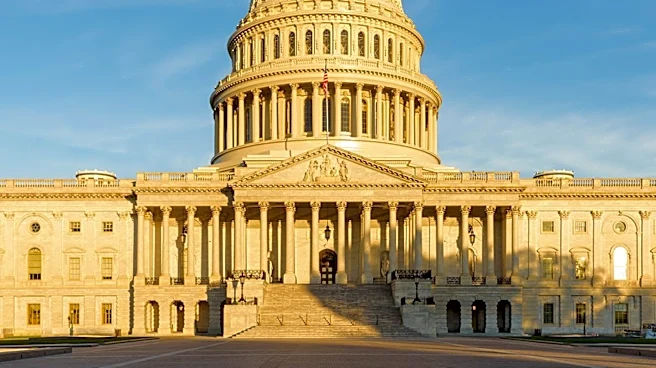
The U.S. Congress is actively tracking bills pertaining to the U.S. Postal Service (USPS). This legislative oversight is facilitated through platforms that categorize and display bills related to specific subjects, as determined by the Library of Congress.
The tracking system allows for monitoring of proposed legislation that could impact the operations, services, and overall structure of the USPS. While the specific content of these bills is not detailed, their existence indicates ongoing governmental attention to postal affairs. The USPS itself offers a range of services including Priority Mail, International Mail, and the sale of postage stamps, with various locations like Postal Connections 145 in Fort Mohave, Arizona, acting as official USPS Approved Shippers. Additionally, the USPS is currently engaged in recruitment efforts for positions such as mail carriers, clerks, and mail handlers in states like Kentucky.
Why It's Important?
Congressional tracking of USPS-related legislation is crucial for several reasons. It reflects the ongoing governmental interest in maintaining and potentially reforming a vital national service that impacts every American household and business. The USPS plays a critical role in the nation's infrastructure, facilitating communication, commerce, and the delivery of essential goods, including medications. Any legislative changes could affect service quality, pricing, employee benefits, and the financial stability of the postal service. For businesses, particularly small and medium-sized enterprises that rely heavily on mail for shipping and marketing, legislative decisions could alter operational costs and logistical efficiency. For the general public, these bills could influence the accessibility and affordability of postal services, which are particularly important in rural areas where other delivery options may be limited. The recruitment efforts in Kentucky highlight the continuous need for a robust workforce to sustain these operations.
What's Next?
The ongoing tracking of U.S. Postal Service bills by Congress suggests that legislative discussions and potential actions regarding the USPS will continue. Stakeholders, including postal workers' unions, businesses that depend on postal services, and the general public, will likely monitor these developments closely. Future legislative outcomes could lead to reforms in USPS operations, funding models, or service offerings. The recruitment drives for various positions, such as mail carriers and clerks, indicate a proactive effort by the USPS to address staffing needs, which could be influenced by or influence future legislative decisions. The specific impact of these bills will become clearer as they progress through the legislative process, potentially leading to new laws that shape the future of the U.S. postal system.
Beyond the Headlines
Beyond the immediate legislative tracking, the continuous congressional focus on the USPS underscores the broader societal debate surrounding the role of public services in a modern economy. The USPS, as a government-owned corporation, often faces challenges balancing its public service mandate with financial sustainability. Legislative actions can reflect differing philosophies on whether the USPS should operate more like a private enterprise or primarily as a public utility. This ongoing tension has implications for universal service obligations, particularly in an era of increasing digital communication and e-commerce. The legislative process also highlights the complex interplay between federal policy, local service delivery, and the livelihoods of hundreds of thousands of postal employees, making it a significant area of public policy with far-reaching consequences for national connectivity and economic activity.