



What's Happening?
U.S. President Donald Trump has ordered a comprehensive blockade of all sanctioned oil tankers entering and leaving Venezuela. This move has led to a rise in U.S. crude futures by over 1%, with prices reaching $55.99. The blockade is part of a broader
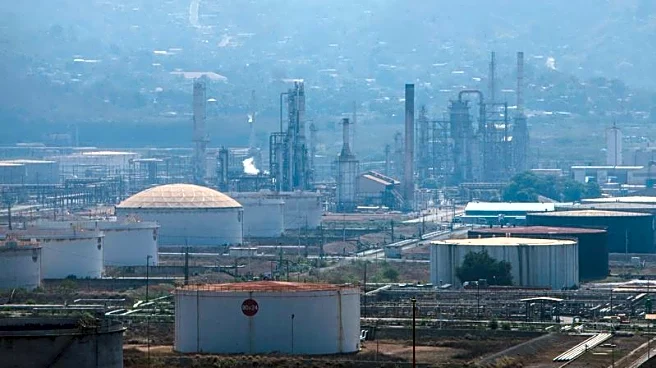
strategy to pressure the Venezuelan government, led by Nicolas Maduro, whom President Trump has accused of facilitating drug trafficking into the U.S. This action follows the recent seizure of a sanctioned oil tanker off the Venezuelan coast. The blockade is expected to further strain Venezuela's oil exports, which are already under significant pressure due to existing U.S. sanctions.
Why It's Important?
The blockade ordered by President Trump is significant as it intensifies the U.S. pressure campaign against Venezuela, potentially leading to further economic destabilization in the region. For the global oil market, this move could contribute to volatility in oil prices, especially if it leads to a reduction in available supply. The action also underscores the U.S. administration's continued hardline stance on Venezuela, which could have broader geopolitical implications, particularly in U.S.-Latin America relations. Additionally, the blockade may influence global oil supply dynamics, affecting countries that rely on Venezuelan oil.
What's Next?
The blockade could lead to increased tensions between the U.S. and Venezuela, potentially prompting responses from other countries involved in Venezuelan oil trade. The international community may react to this escalation, possibly leading to diplomatic negotiations or further sanctions. The oil market will likely monitor the situation closely, as any prolonged disruption in Venezuelan oil exports could impact global oil prices and supply chains. Stakeholders in the oil industry, including companies and governments, will need to assess the potential risks and adjust their strategies accordingly.