



What's Happening?
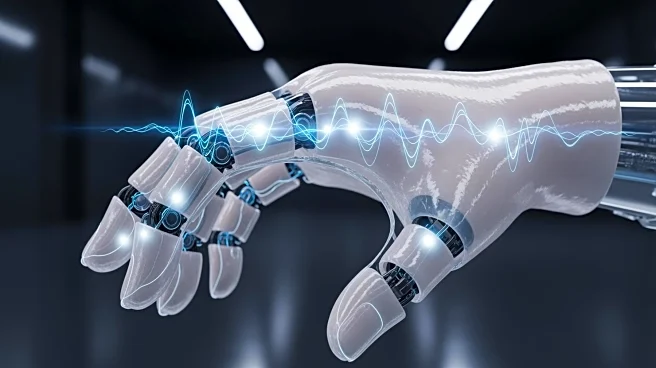
Researchers have developed a new type of robotic skin that allows humanoid robots to sense pain and react instantly, mimicking the human nervous system. This neuromorphic robotic e-skin, created by scientists in China, consists of four layers, including
a protective cover and sensors that act like human nerves. The skin sends regular electrical pulses to the robot's CPU to indicate normal conditions. When touched, it sends signals about the pressure applied, and if the force exceeds a certain threshold, it triggers a rapid reflex reaction, bypassing the CPU to prevent damage. This innovation aims to enhance the interaction between robots and their environments, making them more intuitive and responsive.
Why It's Important?
The development of this robotic skin is significant as it represents a major step forward in the field of robotics, particularly in enhancing the safety and functionality of humanoid robots. By enabling robots to sense and react to pain, this technology could improve their ability to operate in dynamic environments, such as homes, hospitals, and workplaces. This advancement could lead to more empathetic service robots that can interact with humans and their surroundings more naturally. The ability to quickly repair the skin using a modular design also adds to the practicality and longevity of robotic applications.
What's Next?
The research team plans to improve the skin's sensitivity to allow it to detect multiple touches simultaneously without confusion. This enhancement could further refine the robot's ability to interact with complex environments. As this technology progresses, it may lead to broader adoption in various industries, potentially transforming how robots are integrated into everyday life and work settings. Stakeholders in robotics and artificial intelligence will likely monitor these developments closely, considering the implications for future robotic capabilities and applications.
Beyond the Headlines
This development raises ethical and philosophical questions about the nature of pain and consciousness in machines. As robots become more human-like in their sensory capabilities, discussions around the rights and treatment of robots may emerge. Additionally, the integration of such advanced technology into robots could influence public perception and acceptance of robots in society, potentially leading to shifts in cultural attitudes towards automation and artificial intelligence.