





What's Happening?
A new global report from Europe’s Copernicus Atmosphere Monitoring Service (CAMS) reveals that billions of people worldwide were exposed to unhealthy levels of ground-level ozone pollution in 2026. Only 5% of the global population breathed ozone at levels considered
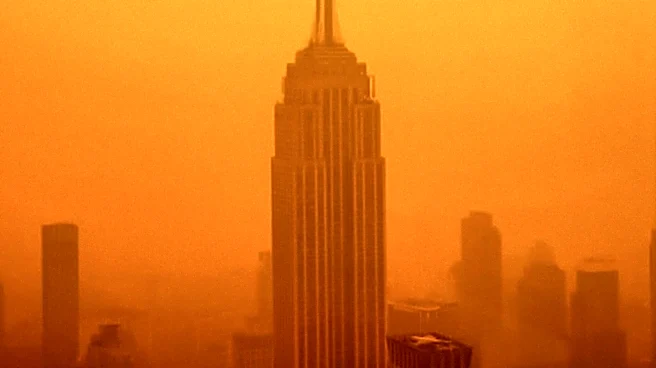
'good' by the World Health Organization (WHO). Nearly 40% of people experienced the highest category of ozone exposure tracked by CAMS, with Asia being the most affected region. In North America, over two-thirds of the population experienced poor or worse ozone levels, predominantly along the two U.S. coasts and in major cities. Ground-level ozone forms when pollutants from vehicles, factories, and other sources react in sunlight, with hot, still summer weather accelerating these reactions and allowing the gas to accumulate. Wildfires also contribute to the ingredients for ozone formation, impacting areas like the U.S. where decades of emission cuts have not significantly reduced ozone levels.
Why It's Important?
The widespread exposure to dangerous ozone levels poses significant public health risks across the U.S. and globally. Ground-level ozone irritates the lungs, leading to respiratory problems and exacerbating existing conditions, particularly for children, older adults, and individuals with respiratory or cardiovascular issues. The concentration of poor ozone levels on the U.S. coasts and in large urban centers means that densely populated areas are disproportionately affected, potentially increasing healthcare burdens and reducing overall quality of life. The persistence of high ozone levels despite emission cuts highlights the complex nature of air pollution, where factors like wildfires and transboundary pollution play a crucial role, necessitating comprehensive and adaptive environmental policies.
What's Next?
To mitigate the health impacts of high ozone levels, public health advisories will likely become more frequent, urging vulnerable populations to reduce prolonged or intense outdoor physical activity, especially during peak ozone periods. Policymakers in the U.S. will need to re-evaluate current air quality regulations and consider new strategies to address ozone precursors, including those from wildfires. International cooperation may also be necessary, as ozone can drift across borders and oceans. Continued research into the specific sources and atmospheric chemistry of ozone, particularly the role of wildfires, will be essential to develop more effective control measures and improve forecasting capabilities.
Beyond the Headlines
The persistent challenge of ground-level ozone pollution, even with efforts to reduce emissions, points to a deeper environmental and public health crisis. It underscores the interconnectedness of climate change, natural disasters like wildfires, and air quality. The fact that ozone levels remain high in the U.S. despite decades of emission cuts suggests that a more holistic approach is needed, one that integrates climate action with air quality management. This situation also raises questions about environmental justice, as marginalized communities often bear a disproportionate burden of air pollution. Addressing this complex issue requires not only technological solutions but also systemic changes in energy production, transportation, and land management, alongside robust public health interventions.