








What's Happening?
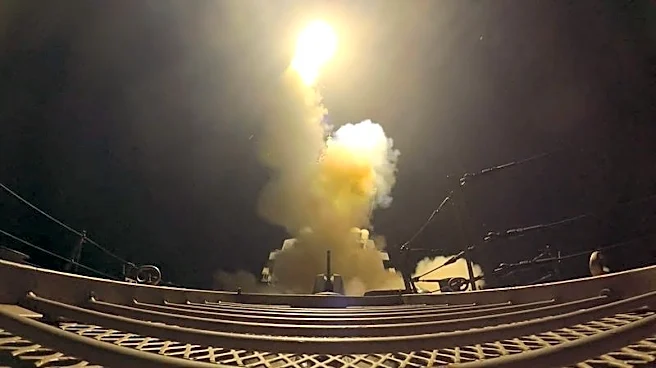
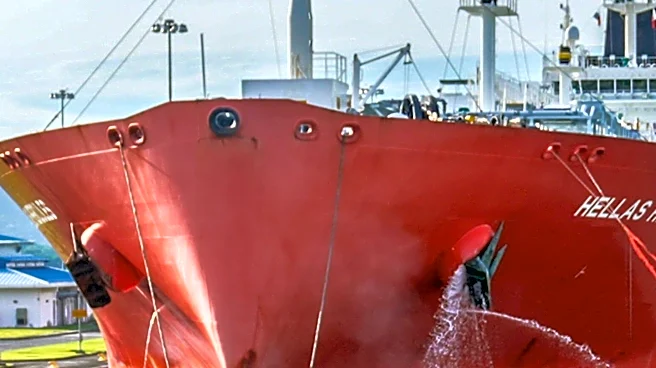
The number of tankers transiting the Strait of Hormuz has decreased to its lowest level in two months due to renewed military strikes between the U.S. and Iran, as well as attacks on vessels in the region. Shipping data indicates that many vessels are
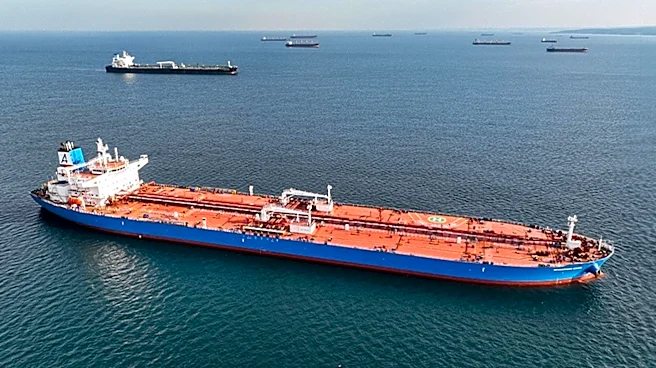
turning off their AIS tracking transponders, complicating efforts to track the full number of ships crossing the waterway. According to analysis from Kpler, oil and gas tanker traffic has significantly declined since May 25. The U.S. Navy-led Joint Maritime Information Center reported that commercial traffic through the strait continues at reduced levels, reflecting operator caution following recent attacks. The Sea Faith oil products tanker was one of the few visible vessels heading towards the Strait of Hormuz, with a destination of Sohar.
Why It's Important?
The Strait of Hormuz is a critical chokepoint for global oil and gas shipments, and any disruption in its traffic can have significant implications for global energy markets. The current decline in tanker traffic could lead to tighter supply and higher prices, affecting economies worldwide. The situation poses a downside risk for tanker markets, as global inventories have been rapidly depleted in recent months. The ongoing tensions between the U.S. and Iran could exacerbate these issues, potentially leading to further disruptions in the strait and impacting global energy security.
What's Next?
If the tensions between the U.S. and Iran continue to escalate, there could be a prolonged closure of the Strait of Hormuz, which would severely impact global oil and gas supplies. Stakeholders, including governments and energy companies, may need to explore alternative routes or increase security measures to ensure the safe passage of vessels. The international community may also seek diplomatic solutions to de-escalate the situation and prevent further disruptions in the region.