

What's Happening?
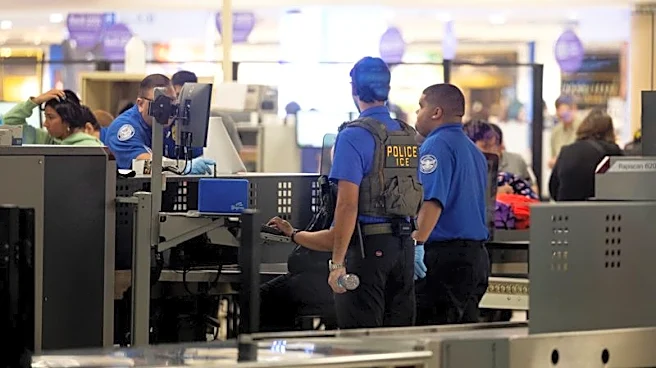
Following the resumption of payments to Transportation Security Administration (TSA) workers, U.S. airports are advising travelers to avoid arriving excessively early for flights. This guidance comes after a period of extended wait times in March, caused
by a partial government shutdown that led to many TSA agents quitting or calling out due to unpaid wages. President Trump signed an order on March 27 to redirect funds to TSA workers, allowing them to receive their paychecks. Despite this, long-term funding still requires approval from lawmakers, who are on recess until mid-April. Airports like Austin-Bergstrom International and Denver International are recommending travelers arrive two to three hours before their flights, as arriving too early can exacerbate wait times. The Port Authority of New York and New Jersey has noted improvements in wait times but advises checking with airlines and airport websites for the latest information.
Why It's Important?
The resolution of TSA worker payments is crucial for maintaining efficient airport operations and reducing traveler stress. The previous delays had significant impacts on travel plans, with passengers arriving hours early to ensure they made their flights. This situation highlighted the vulnerability of airport operations to government funding issues. The advice to avoid arriving too early aims to streamline security processes and prevent unnecessary congestion. This development is significant for the travel industry, as it seeks to restore normalcy and confidence among travelers. Efficient airport operations are vital for economic activities related to travel and tourism, impacting airlines, local economies, and the broader national economy.
What's Next?
As lawmakers return from recess, the focus will be on securing long-term funding for the TSA to prevent future disruptions. Airports and travelers will be closely monitoring the situation, with potential adjustments to travel advice based on legislative outcomes. The travel industry may advocate for more stable funding mechanisms to avoid similar issues in the future. Additionally, airports may continue to refine their operational strategies to handle fluctuations in passenger volumes and staffing levels, ensuring smoother travel experiences.