





What's Happening?
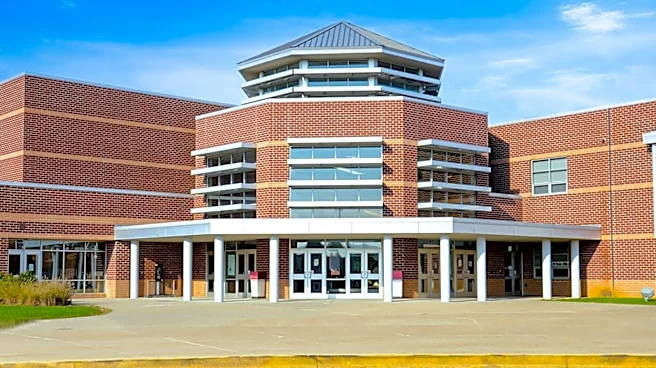
A 14-year-old boy has been arrested for felony assault following an alleged knife attack at Omaha's Central High School on Tuesday. According to Omaha Police, a School Resources Officer responded to a fight in a lower-level hallway around 9:30 a.m. The
officer, with assistance from school security staff, detained the suspect. A subsequent search revealed a knife concealed in the boy's front waistband, which was safely seized by the officer. Authorities stated that the fight was linked to an ongoing off-campus dispute, and the boy reportedly swung the knife toward another student before security personnel intervened. The second student involved in the altercation was released to a guardian. An assault charge will be referred to the county attorney's office for juvenile court proceedings.
Why It's Important?
This incident underscores the persistent challenges of violence and weapon possession within school environments, highlighting the critical role of school resource officers and security staff in maintaining student safety. The involvement of a knife in an on-campus altercation raises significant concerns for parents, educators, and the wider community regarding the effectiveness of existing security measures and conflict resolution strategies. Such events can lead to increased anxiety among students and staff, potentially impacting the learning environment and overall school morale. Furthermore, the connection to an 'ongoing off-campus dispute' suggests that external conflicts are spilling into school grounds, complicating efforts to ensure a secure educational setting. The legal process through the juvenile court system will determine the consequences for the arrested individual, but the broader implications for school safety protocols and community-school partnerships remain a key focus.
What's Next?
The 14-year-old boy faces an assault charge that will be referred to the county attorney's office for juvenile court. This process will determine the legal repercussions for his actions. In the immediate aftermath, Central High School and Omaha Public Schools may review and potentially reinforce their security measures, including policies on weapon detection and conflict intervention. There could be increased discussions among school administrators, parents, and law enforcement about strategies to prevent similar incidents, such as enhanced surveillance, metal detectors, or more robust counseling and mediation programs for students involved in off-campus disputes. The community will likely be looking for assurances that steps are being taken to ensure the safety of students and staff within school premises.
Beyond the Headlines
The incident at Omaha's Central High School points to a deeper societal issue where conflicts originating outside school walls are increasingly manifesting within educational institutions. This blurs the lines between school safety and community safety, suggesting that addressing school violence requires a holistic approach that extends beyond the school gates. It highlights the need for stronger community engagement, parental involvement, and early intervention programs to address the root causes of youth violence and disputes. The presence of a weapon, particularly a knife, in a school setting also raises questions about the accessibility of such items to minors and the effectiveness of current preventative measures. This event could prompt a re-evaluation of how schools and communities collaborate to foster environments where students feel safe and conflicts are resolved constructively, rather than through violence.