
What's Happening?
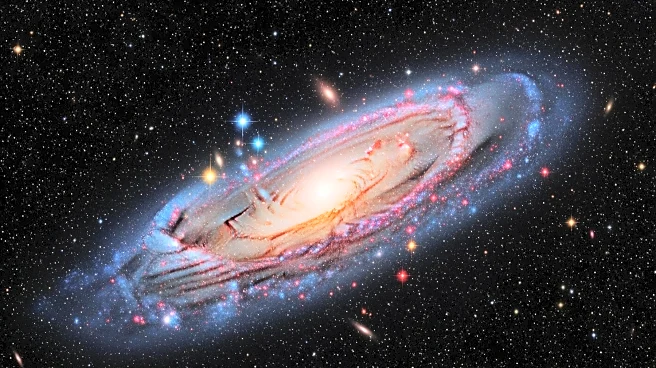
The 2025 Space Telescope Advent Calendar has unveiled a striking image of the spiral galaxy NGC 6000, located approximately 100 million light-years away. This galaxy, captured by the Hubble Space Telescope,
showcases a diverse range of stars across its expansive disc, which measures about 66,600 light-years in width. The image highlights the older, cooler stars near the galaxy's center, which emit a yellow light, contrasted by the younger, hotter stars in the outer arms that cast a blue hue. This daily reveal is part of an advent calendar that will continue to showcase new astronomical images until December 25, 2025.
Why It's Important?
The release of these images through the advent calendar serves to enhance public interest and understanding of astronomical phenomena. By showcasing the diverse characteristics of stars within a single galaxy, the calendar provides insights into stellar evolution and the dynamic processes within galaxies. This initiative not only educates the public but also underscores the importance of space exploration and the role of telescopes like Hubble in expanding our knowledge of the universe. Such efforts can inspire future generations to pursue careers in science and technology, contributing to advancements in these fields.
What's Next?
As the advent calendar progresses, more images will be revealed, each offering unique insights into different aspects of the universe. This ongoing series may prompt discussions among astronomers and enthusiasts about the implications of these observations for our understanding of cosmic structures and phenomena. Additionally, the continued release of these images could lead to increased public engagement with space science, potentially influencing educational programs and funding for future space missions.
Beyond the Headlines
The advent calendar's focus on diverse astronomical images highlights the cultural and educational value of space exploration. By making complex scientific concepts accessible to the general public, it fosters a broader appreciation for the universe's complexity and beauty. This initiative also reflects the collaborative efforts of international space agencies, such as NASA and ESA, in advancing our understanding of space, emphasizing the importance of global cooperation in scientific endeavors.