



What's Happening?
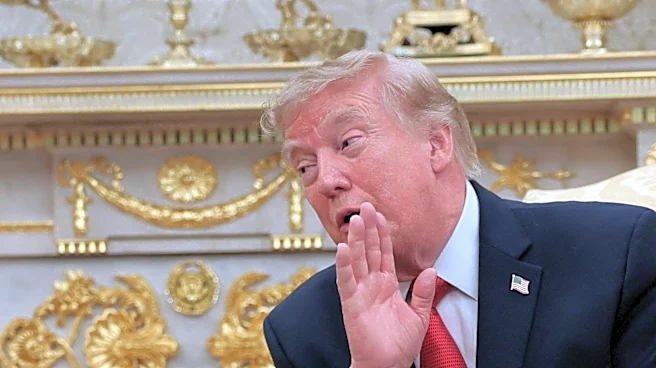
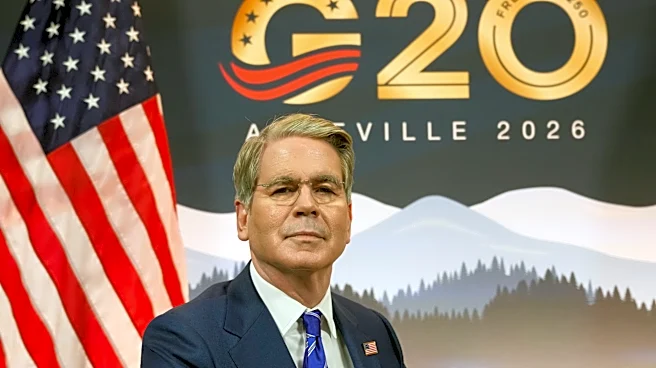
President Trump has officially endorsed Republican congressional candidate Scott Singer in the race for Florida's 25th congressional district. Singer is challenging incumbent U.S. Rep. Jared Moskowitz in what is considered one of the nation's most competitive
races. President Trump announced his endorsement on Truth Social, referring to Singer as an "America First Patriot." Singer, a former three-term mayor of Boca Raton, expressed gratitude for the endorsement on X, aligning himself with the "America First Republican" platform. The 25th congressional district was recently redrawn by Republican Governor Ron DeSantis and the Republican-majority Florida Legislature. This redistricting effort aimed to bolster the chances of President Trump and Republicans in maintaining their narrow control of the House. The new district boundaries extend along the coast from Palm Beach County to Miami-Dade, encompassing areas like Delray Beach, Pompano Beach, Hallandale, and Miami Beach. Historically, the district voted 54-45 for President Trump in 2024, but 52-47 for Biden in 2020, indicating a shift in its political leanings.
Why It's Important?
This endorsement from President Trump is significant as it injects a high-profile national political figure into a local congressional race, potentially galvanizing Republican voters and donors. The redrawing of Florida's congressional maps earlier this year by Governor DeSantis and the Republican-led legislature is a critical factor, as it was specifically designed to improve the GOP's chances in competitive districts. Republicans currently hold 20 out of Florida's 28 U.S. House seats, and the new districts could enable them to secure up to four additional seats in the upcoming November elections. The non-partisan Cook Political Report has classified this race as a 'toss-up,' highlighting its competitive nature and its potential to influence the balance of power in the U.S. House of Representatives. A victory for Singer would not only add to the Republican majority but also validate the strategic redistricting efforts, demonstrating the impact of state-level political actions on national electoral outcomes. Conversely, a Moskowitz victory would represent a significant hold for Democrats against a concerted Republican push.
What's Next?
The endorsement from President Trump is expected to intensify the campaign in Florida's 25th congressional district, likely leading to increased fundraising and campaign activities for Scott Singer. Both candidates will likely leverage their respective national party support to mobilize voters. The race, already rated a 'toss-up' by the Cook Political Report, will continue to be closely watched as a bellwether for the broader national political landscape. The outcome in November will determine whether the Republican redistricting efforts successfully translate into a gain of a U.S. House seat. Further, the race will serve as a test of President Trump's endorsement power in competitive districts following the 2024 election. The focus will now shift to how effectively Singer can capitalize on this high-profile endorsement and how Representative Moskowitz counters the increased Republican momentum.
Beyond the Headlines
The strategic redistricting in Florida, which created the new 25th congressional district, exemplifies a broader national trend where state legislatures actively shape electoral maps to favor one party. This practice, often referred to as gerrymandering, has profound implications for democratic representation and the competitiveness of elections. While proponents argue it reflects demographic shifts and allows for more cohesive representation, critics contend it undermines the democratic process by creating safe seats and reducing voter choice. The shift in the 25th district's voting history—from favoring Biden in 2020 to Trump in 2024—underscores the volatility of political landscapes and the significant impact of boundary changes. This race is not just about one congressional seat; it's a microcosm of the ongoing battle for control of the U.S. House and the effectiveness of partisan redistricting strategies in shaping the future of American politics.