
What's Happening?
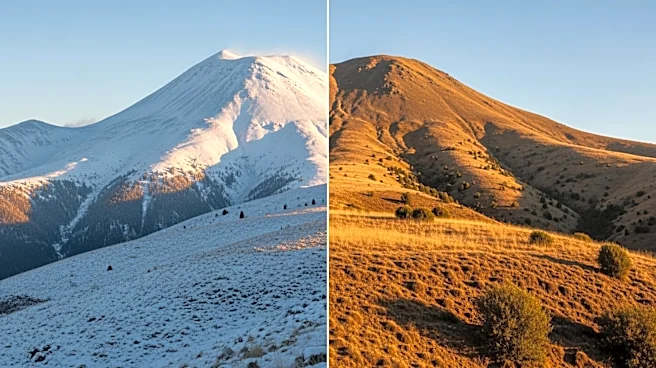
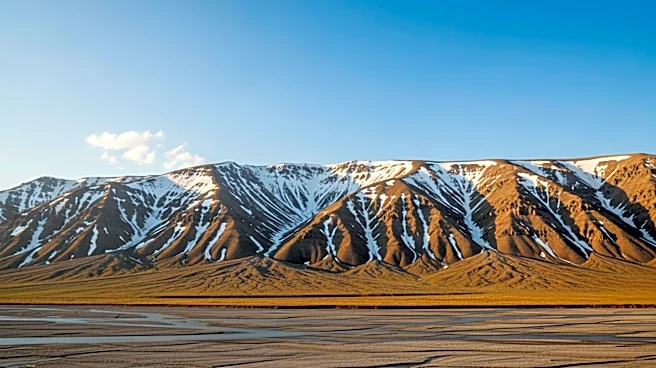
California is experiencing its second-worst snow drought in five decades, as highlighted by new images comparing snow levels from last year to this year. The Sierra snowpack, which peaked on February 25, was only 73% of the average and has since rapidly
decreased. March brought summerlike heat, breaking monthly records across the Western United States. Despite a spring storm that added up to 3.5 feet of snow in the Sierra Nevada, snow levels remain critically low. The Northern Sierra is particularly affected, with snow levels at just 10% of normal as of April 16, compared to 27% in the Central and Southern Sierra. Statewide, snow levels are at 20% of normal, a stark contrast to last year's figures. The Sierra Nevada snowpack is crucial as it provides about a third of California's water supply, with its runoff refilling reservoirs during spring and summer.
Why It's Important?
The snow drought in California has significant implications for the state's water supply and fire risk. The Sierra Nevada snowpack is a vital water source, and its reduced levels could lead to water shortages during the critical summer months. The early snowmelt and warm temperatures mean that California's forests will dry out sooner, increasing the risk of wildfires. This situation could lead to a severe fire season, posing threats to communities, wildlife, and the environment. The drought also highlights the broader impacts of climate change, as extreme weather events become more frequent and intense, challenging water management and conservation efforts in the state.
What's Next?
As California faces the potential for a severe fire season, state and local agencies may need to implement additional fire prevention and response measures. Water conservation efforts could be intensified to manage the reduced water supply. Policymakers might also consider long-term strategies to address the impacts of climate change on water resources and fire risk. The situation underscores the need for continued research and investment in sustainable water management practices and climate resilience initiatives.
Beyond the Headlines
The snow drought in California is a stark reminder of the ongoing challenges posed by climate change. It raises ethical and policy questions about resource allocation and environmental stewardship. The situation may prompt discussions on the balance between development and conservation, as well as the role of technology and innovation in mitigating climate impacts. The drought also highlights the interconnectedness of natural systems, as changes in one area can have cascading effects on others, such as agriculture, energy production, and public health.