




What's Happening?
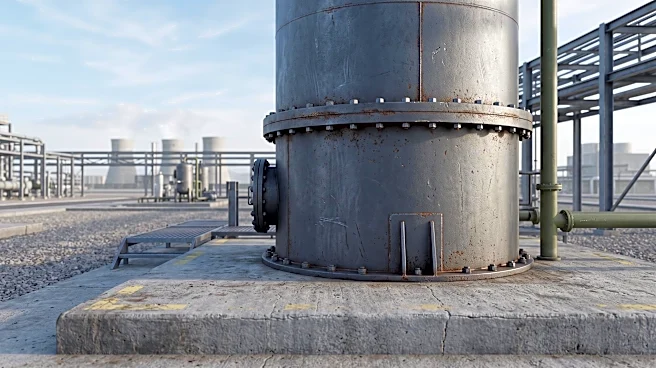
West Virginia Governor Patrick Morrisey announced state funding to address critical water infrastructure issues in the village of Beech Bottom. The state will provide nearly $300,000 for repairs to two side-by-side water tanks, which serve approximately
550 residents and industrial sites. One tank has a leaking valve, with repairs set to begin immediately without service interruptions. The second tank, out of service due to a floor crack, will undergo full floor repairs expected to take four to six weeks. Additionally, the state will contribute $400,000 from the Governor's Civil Contingent Fund as part of a $3 million package for a long-awaited water main and fire hydrant project along Route 2, resolving a multi-year deadlock caused by rising construction costs.
Why It's Important?
This state funding is vital for the health, safety, and economic stability of Beech Bottom. Reliable access to clean water is a fundamental necessity, and the repairs to the water tanks will ensure consistent service for residents and local industries. The water main and fire hydrant project along Route 2 is particularly significant for public safety, as it will close a critical loop in the village's water system, eliminate pressure drop-offs during heavy industrial use, and provide fire hydrants along the Beech Bottom Industrial Park. This infrastructure improvement not only enhances emergency response capabilities but also supports economic development by providing essential services for businesses, making the area more attractive for investment and growth.
What's Next?
Work on the leaking water tank is scheduled to begin immediately, with no expected service interruptions. Repairs to the second tank, addressing the floor crack, are anticipated to commence soon and will take approximately four to six weeks to complete. The $3 million package for the Route 2 water main and fire hydrant project, now fully funded with the state's contribution, will allow construction to begin immediately. These projects are expected to stabilize water service and boost economic development in the Northern Panhandle. Local and state leaders will likely monitor the progress and impact of these infrastructure improvements.
Beyond the Headlines
The state's intervention to fully fund these water infrastructure projects highlights the challenges many smaller communities face in maintaining essential services, particularly when federal grants fall short due to escalating costs. This situation underscores the importance of flexible state funding mechanisms, like the Infrastructure and Jobs Development Council's Critical Needs Fund and the Governor's Civil Contingent Fund, in bridging financial gaps. The emphasis on 'doing the basics right'—ensuring clean water, good roads, and available energy—reflects a broader governmental philosophy that foundational infrastructure is key to both public welfare and economic growth. This approach could influence future state-level infrastructure investment strategies across West Virginia.