






What's Happening?
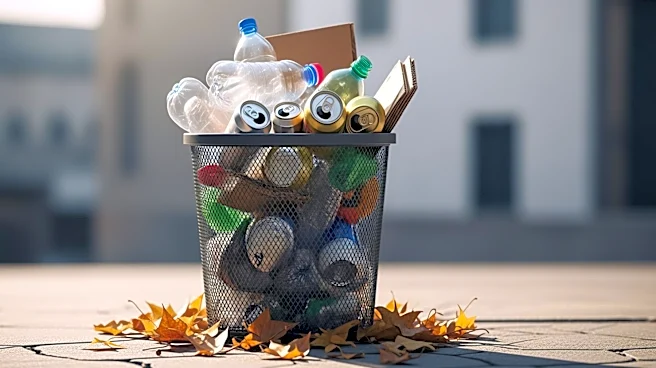
Recycling in the United States is facing significant challenges despite widespread public support. While 73% of U.S. households have access to curbside recycling, only 43% actively participate, and a mere 9% of plastic is actually recycled. This discrepancy
is partly due to a lack of public understanding about recycling processes and guidelines. Many materials, such as plastic wrappers and snack bags, are deemed non-recyclable under local guidelines and end up in landfills. Companies like TerraCycle are attempting to address this issue by partnering with brands to recycle hard-to-process waste into new products. However, the financial viability of recycling certain materials remains a barrier. Efforts to reduce single-use plastics, such as banning plastic bags, are ongoing, but more comprehensive solutions are needed to improve recycling rates and reduce waste.
Why It's Important?
The inefficiencies in the U.S. recycling system have significant environmental and economic implications. With only a small fraction of plastic being recycled, the majority ends up in landfills, contributing to pollution and environmental degradation. This situation underscores the need for improved recycling infrastructure and public education to increase participation and effectiveness. Companies like TerraCycle demonstrate that innovative approaches can help, but broader systemic changes are necessary to make recycling financially viable and environmentally impactful. The current state of recycling also highlights the importance of reducing single-use plastics and finding sustainable alternatives to mitigate waste.