




What's Happening?
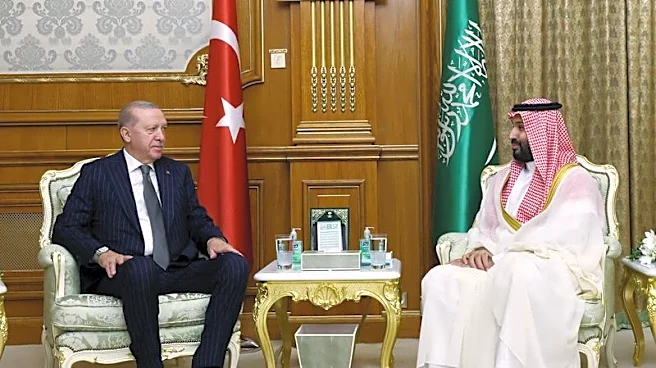
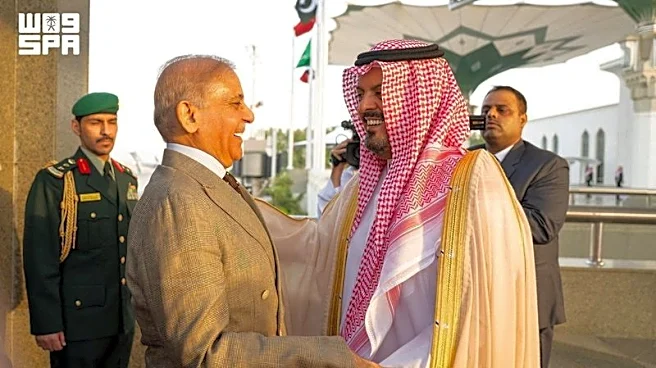
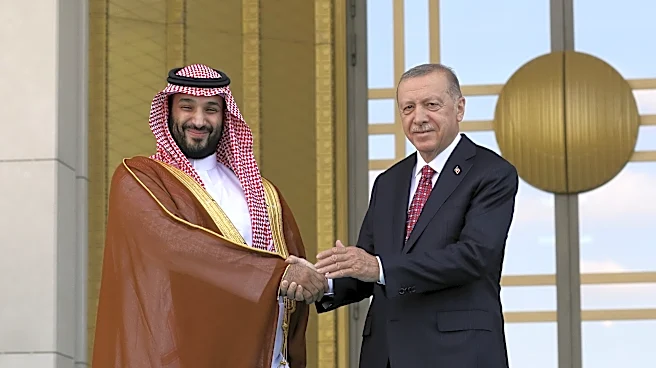
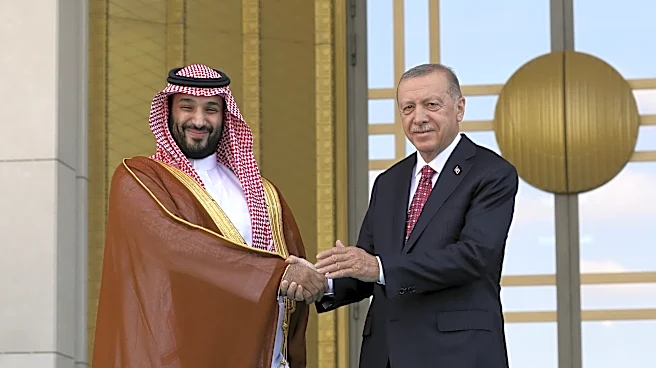
Saudi Arabia, Turkey, and Pakistan have signed a significant defense agreement known as the 'Mecca Joint Defense Agreement.' This pact, signed in Mecca by Saudi Crown Prince Mohammed bin Salman, Turkish President Recep Tayyip Erdogan, and Pakistan's Prime
Minister Shehbaz Sharif, establishes that an attack on one of these countries will be considered an attack on all three. The agreement aims to enhance defense cooperation among the three Sunni Muslim-majority states, which include oil-rich Saudi Arabia, nuclear power Pakistan, and Turkey, which has NATO's second-largest army. The agreement comes at a time of increased regional uncertainty and threats, particularly from the ongoing conflict involving Iran. The pact is intended to strengthen collective deterrence against aggression and enhance all aspects of defense cooperation among the three states.
Why It's Important?
The signing of this defense agreement is significant as it represents a strategic alignment among three major regional powers in response to growing security concerns. For Saudi Arabia, which has faced attacks on its critical infrastructure and oil facilities, diversifying defense partnerships is crucial. The agreement also reflects a shift in relations between Saudi Arabia and Turkey, which have moved towards alignment and partnership after previous tensions. This pact could potentially alter the balance of power in the region, especially in the context of ongoing conflicts involving Iran. The agreement is seen as a move to increase deterrence and prevent conflict, raising the cost of aggression for potential adversaries. It also highlights the evolving nature of warfare and the need for closer cooperation among countries with complementary strengths.
What's Next?
The agreement is expected to lead to deeper coordination in diplomacy, defense production, and technology transfer among the three countries. While large troop deployments from Turkey and Pakistan to assist Saudi Arabia are unlikely, token deployments and increased cooperation in defense sectors are possible. The pact may also lead to increased coordination on diplomacy and weapons development, with Saudi capital potentially boosting the defense sectors of Turkey and Pakistan. The agreement is open to participation from other countries aiming for regional peace and stability, suggesting potential expansion of the pact's influence.
Beyond the Headlines
The defense agreement underscores the shifting dynamics in the Middle East, where regional powers are increasingly seeking to build sustainable self-reliant capabilities rather than relying solely on external powers like the United States. The pact is not intended to form a military axis or sectarian bloc, but rather to enhance regional stability. It reflects a growing desire among these countries to address regional fragmentation, civil conflict, and threats from armed non-state groups. The agreement also reaffirms the right of defense as defined in Article 51 of the UN Charter, emphasizing its defensive nature.