
What's Happening?
The World Health Organization (WHO) Director-General, Tedros Adhanom Ghebreyesus, is traveling to Congo to oversee efforts in combating a rare Ebola outbreak in the Ituri province. The outbreak involves
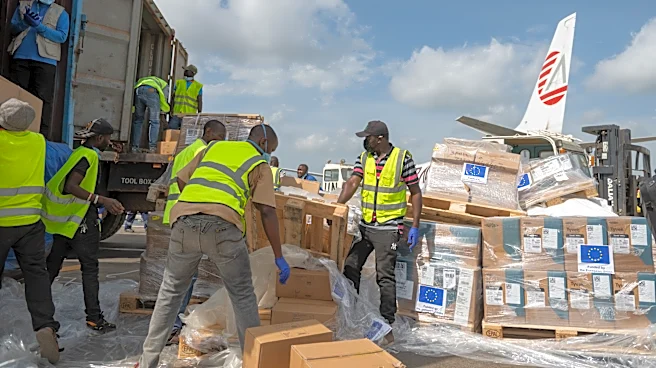
the Bundibugyo virus, which lacks approved treatments or vaccines. Aid workers are delivering essential supplies, including masks and medications, to the affected areas. The situation is complicated by local resistance to medical protocols and ongoing violence from armed groups. The U.S. has pledged an additional $80 million to support the response, while the Africa CDC is working on developing treatments and vaccines.
Why It's Important?
The outbreak poses a significant public health challenge, with over 1,000 suspected cases and at least 220 deaths reported. The lack of approved treatments and vaccines for the Bundibugyo virus exacerbates the crisis. The involvement of international organizations like WHO and the U.S. highlights the global concern over the spread of the virus. The situation also underscores the need for improved health infrastructure and community engagement to manage such outbreaks effectively. The ongoing conflict in the region further complicates response efforts, emphasizing the intersection of health and security issues.
What's Next?
Efforts will continue to focus on delivering aid and engaging with local communities to overcome resistance to medical protocols. The WHO's declaration of the outbreak as a public health emergency aims to mobilize more resources and international support. The development of treatments and vaccines is a priority, with hopes for progress by the end of the year. The situation remains fluid, with the potential for further spread of the virus if containment measures are not effectively implemented.