


What's Happening?
The Heinz History Center will host a living history event titled 'Living History: The 1776 Gathering at Fort Pitt' to commemorate a pivotal conference that took place in October 1776. This event will feature special presentations by Fort Pitt Museum Living History Coordinator
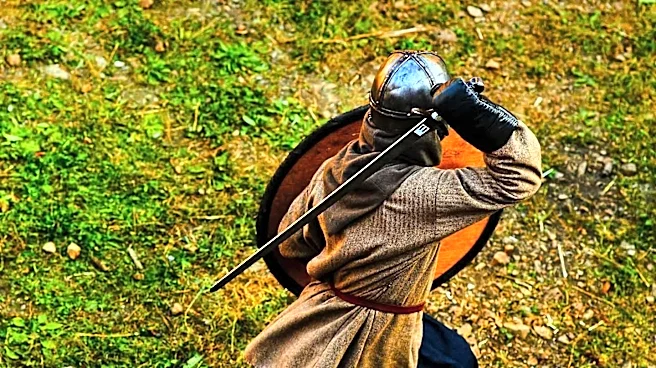
Lukas Smith and DJ Huff, a member of the Seneca Nation. The original 1776 gathering brought together representatives of the Continental Congress, including Pennsylvania lawyer Jasper Yeates and Continental Congress Indian agent George Morgan, with leaders of Native nations in the Ohio Country. The primary objective of this historical meeting was for American officials to seek neutrality from Native nations during the escalating Revolutionary War. The living history vignettes and musket and rifle demonstrations will be held at 1, 2, and 3 p.m. on the Fort Pitt Museum lawn, weather permitting. Admission to these outdoor demonstrations is free, while regular museum admission applies for entry to the museum's exhibitions.
Why It's Important?
This living history event is important for several reasons. It provides a unique educational opportunity for the public to understand a critical, often overlooked, aspect of early U.S. history: the complex diplomatic relations between the nascent American government and Native American nations during the Revolutionary War. By focusing on the pursuit of neutrality, the event highlights the strategic importance of Native American alliances and the delicate balance of power in the Ohio Country during that period. For the Heinz History Center, it reinforces its role as a key institution for preserving and interpreting regional and national history. Such events foster a deeper appreciation for historical context, encouraging dialogue about the diverse perspectives and experiences that shaped the nation. It also underscores the ongoing relevance of historical events in understanding contemporary issues related to indigenous rights and intergroup relations.
What's Next?
The Heinz History Center will continue to promote the 'Living History: The 1776 Gathering at Fort Pitt' event to attract visitors. The success of this event may lead to the development of similar programs that explore other significant historical interactions between different cultural groups in the region. The collaboration with a member of the Seneca Nation, DJ Huff, suggests a commitment to presenting diverse perspectives, which could become a model for future historical interpretations. The event also serves as a reminder of the ongoing efforts by historical institutions to make history accessible and engaging through interactive experiences. Future programming might delve deeper into the long-term consequences of these early diplomatic efforts on Native American communities and U.S. expansion.
Beyond the Headlines
The 1776 gathering at Fort Pitt, and its commemoration, sheds light on the often-complex and morally ambiguous nature of early American diplomacy. The Continental Congress's pursuit of neutrality from Native nations reveals the strategic pragmatism of the time, where alliances and non-aggression pacts were crucial for the survival of the fledgling United States. This event challenges a simplistic narrative of the Revolutionary War, demonstrating that the conflict was not solely between American colonists and the British, but also involved intricate relationships with various Native American tribes, each with their own interests and sovereignty. The inclusion of a Seneca Nation member in the living history presentation is crucial for providing an authentic and nuanced perspective, moving beyond Eurocentric historical accounts. This approach helps to acknowledge the agency and diverse experiences of Native peoples during a transformative period in North American history, fostering a more complete and inclusive understanding of the past.