


What's Happening?
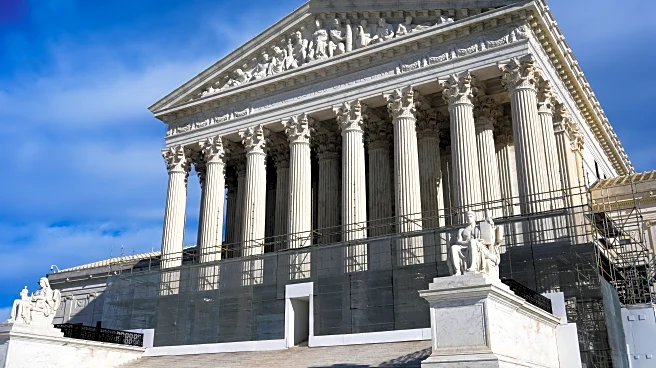
The United States Supreme Court has recently ruled against President Trump's previous trade measures, leading to the imposition of a new 10 percent global tariff. This decision has prompted immediate reactions from various governments and markets worldwide.
President Trump announced the new tariff via his social media platform, Truth Social, stating that it would take effect almost immediately. The ruling has left countries evaluating the impact on key industries, investment plans, and trade negotiations. South Korea, for instance, is reviewing its trade deal with the U.S., while India is reconsidering its recent trade framework with the U.S. due to the legal uncertainties introduced by the court's decision. Meanwhile, China has responded cautiously, with analysts predicting a potential reduction in overall tariff levels, which could provide some economic relief.
Why It's Important?
The Supreme Court's decision to limit President Trump's tariff powers is significant as it challenges the legal basis of past duties and affects ongoing trade agreements. This ruling could reshape international trade dynamics, particularly for countries heavily reliant on exports to the U.S. For South Korea, which has significant trade ties with the U.S., the ruling could impact major agreements, including a multibillion-dollar shipbuilding deal. India's trade negotiations with the U.S. are also in flux, as the country awaits further clarity on the legal standing of tariffs. The decision may also influence China's trade strategy, potentially easing tariff pressures and fostering a more favorable environment for future U.S.-China trade relations.
What's Next?
Countries affected by the Supreme Court ruling are likely to proceed cautiously in renegotiating trade agreements. South Korea and India may delay further negotiations until the legal framework is clarified. The ruling could also set the stage for a reset in U.S.-China trade relations, with a planned state visit by President Trump to China potentially opening new avenues for dialogue. Additionally, the decision may prompt other nations to reassess their trade strategies with the U.S., considering the legal and economic implications of the court's ruling.
Beyond the Headlines
The Supreme Court's ruling highlights a broader legal challenge to President Trump's use of emergency trade powers, emphasizing constitutional limits over economic policy. This decision marks a significant moment in the legal battle over executive authority, potentially influencing future presidential actions in trade policy. The ruling underscores the importance of adhering to constitutional boundaries, setting a precedent for how trade measures are implemented and challenged in the U.S.