





What's Happening?
Congressman Brendan F. Boyle (PA-02) announced $1.04 million in federal funding to enhance public safety at Temple University and the surrounding North Philadelphia community. The announcement was made alongside Temple University President John Fry. This
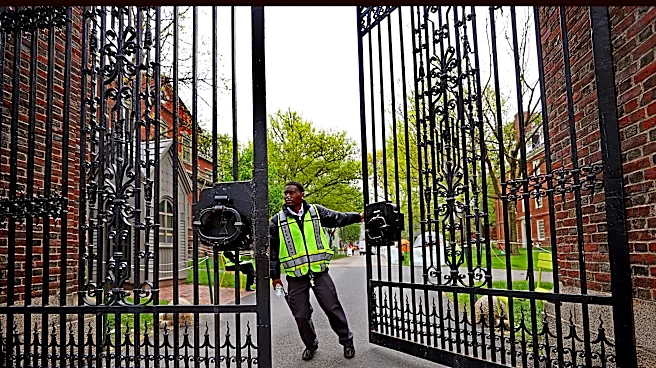
federal Community Project Funding, secured by Boyle through the U.S. Department of Justice, is designated for the Temple University Police Department. The funds will be used to invest in new equipment, provide enhanced officer training, and expand community policing efforts, including additional bicycle patrols. Temple University President Fry emphasized the importance of this grant for the safety and security of the university's approximately 25,000 students, over 6,500 faculty and staff, and neighborhood residents. Congressman Boyle highlighted his role in bringing federal resources to his district, stating his pride in supporting the Temple University police in their mission to provide public safety. The funding aims to improve emergency response capabilities and foster stronger relationships between Temple police officers, students, and local residents.
Why It's Important?
This federal funding is crucial for bolstering public safety in a significant urban educational institution and its surrounding community. The investment in new equipment and enhanced training for the Temple University Police Department can lead to more effective crime prevention and response, directly impacting the well-being of thousands of students, faculty, staff, and North Philadelphia residents. Improved community policing efforts, such as increased bicycle patrols, are vital for building trust and fostering positive relationships between law enforcement and the community, which can lead to better intelligence gathering and a more secure environment. For Temple University, this grant addresses a critical need for safety, which is paramount for attracting and retaining students and faculty. From a broader perspective, this initiative reflects a federal commitment to supporting local public safety needs, potentially serving as a model for other urban universities facing similar challenges. The funding also underscores the role of congressional representatives in securing direct resources for their constituents' immediate needs.
What's Next?
The Temple University Police Department will proceed with implementing the initiatives outlined by the grant. This includes procuring new police equipment, developing and conducting enhanced training programs for officers, and expanding community policing efforts, such as deploying additional bicycle patrols. The university and local community will likely see a gradual rollout of these improvements, with an expected increase in police presence and engagement. Continued collaboration between Congressman Boyle's office, Temple University, and the U.S. Department of Justice will be essential to ensure the effective utilization of these funds and to monitor the impact on public safety. Future assessments will likely evaluate the effectiveness of the new equipment, training, and community programs in reducing crime and improving safety perceptions on campus and in the surrounding neighborhoods. This could also set a precedent for future federal funding requests for similar public safety initiatives at other educational institutions.
Beyond the Headlines
This funding goes beyond immediate safety improvements; it touches upon the broader issue of urban university-community relations and the role of federal support in addressing localized challenges. The emphasis on community policing and fostering closer relationships between police, students, and residents highlights a proactive approach to public safety that extends beyond traditional law enforcement. It acknowledges that a secure environment is built on trust and collaboration, not just enforcement. Furthermore, the grant implicitly recognizes the unique security challenges faced by large urban universities that are deeply integrated into their surrounding neighborhoods. The success of this initiative could influence future policy discussions regarding federal funding for campus safety programs, potentially leading to more comprehensive strategies that integrate universities as key stakeholders in broader urban safety plans. It also underscores the ongoing need for sustained investment in public safety infrastructure and personnel in densely populated areas.