






What's Happening?
Volunteers at Guild Park in Old Orchard Beach, Maine, have cut down more than 500 trees as a result of an infestation by the Hemlock Woolly Adelgid. This action is part of a broader forest management plan initiated by the Ocean Park Association Environment
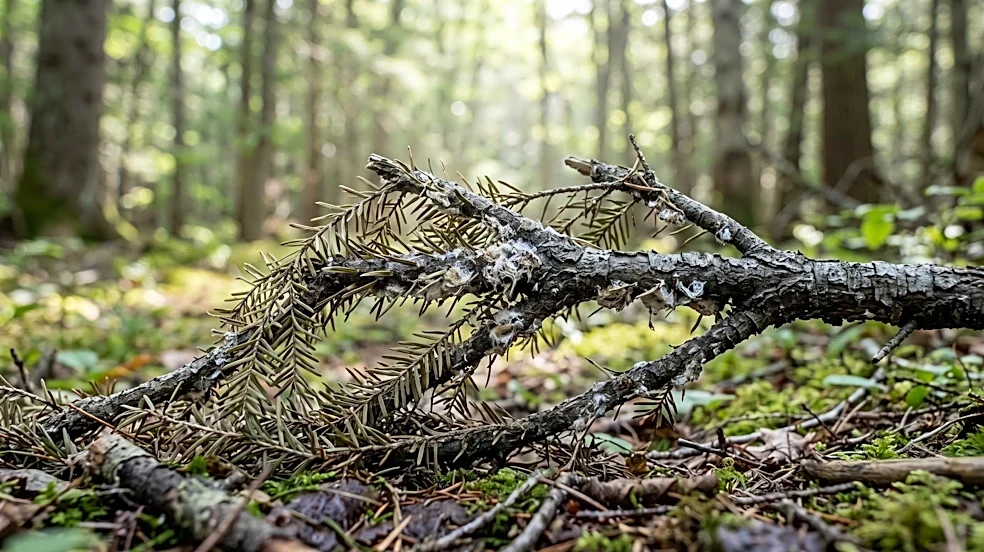
and Natural Resources Committee. The committee stated that most of the removed trees were already dead due to the invasive insect. The Hemlock Woolly Adelgid, described as being about the size of a pen's ballpoint, forms white, cotton-like nests on tree branches, each containing approximately 100 larvae. These larvae attach to the base of hemlock needles and extract sap, ultimately killing the tree. The removal of these impacted trees aims to open the forest canopy, facilitating natural regeneration and promoting the long-term health and sustainability of the park.
Why It's Important?
The widespread removal of over 500 trees in Guild Park highlights the significant ecological and economic threat posed by invasive species like the Hemlock Woolly Adelgid to U.S. forests. Such infestations can devastate native tree populations, alter forest ecosystems, and impact biodiversity. For communities, the loss of trees can diminish recreational areas, reduce property values, and increase costs associated with tree removal and replanting. The proactive forest management plan in Old Orchard Beach underscores the necessity of early detection and aggressive intervention to mitigate the long-term damage caused by invasive pests. This situation serves as a critical example for other regions facing similar ecological challenges, emphasizing the importance of sustainable forestry practices and community involvement in environmental conservation efforts.
What's Next?
The Ocean Park Association Environment and Natural Resources Committee plans to continue its efforts to combat the Hemlock Woolly Adelgid and ensure the park's sustainability. This includes the application of pesticides to certain trees, identified by orange ribbons, and the release of predatory beetles that feed on the adelgid. Over 3,000 trees in the 20-acre park have been cataloged and tagged for monitoring. Additionally, the group is exploring the development of a woodland garden in the newly cleared areas of Guild Park. This garden would feature native plants, aiming to attract diverse wildlife and enhance the educational value of the space. These ongoing initiatives reflect a multi-faceted approach to ecological restoration and community engagement.
Beyond the Headlines
The situation at Guild Park extends beyond immediate tree removal, touching upon broader themes of environmental stewardship and community resilience. The initial reluctance of some committee members to cut down trees, as noted by Janet Anderson, reflects a common emotional challenge in conservation efforts where difficult decisions are necessary for long-term ecological health. The comprehensive approach, including cataloging trees, using pesticides, introducing biological controls, and planning for a woodland garden, demonstrates an evolving understanding of ecosystem management. This case illustrates the complex balance between preserving existing natural landscapes and actively intervening to restore ecological balance in the face of invasive threats, emphasizing the educational role of such projects in fostering a deeper connection between communities and their local environments.