





What's Happening?
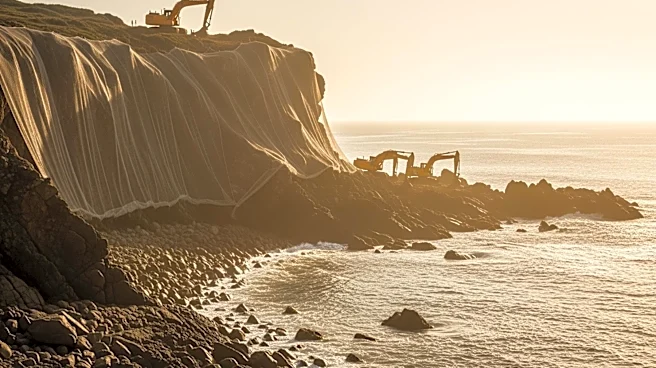
In Waimea Bay, Oʻahu, the Hawaii Department of Transportation has commenced efforts to mitigate rockfall risks following a recent incident where two car-sized boulders descended from a hillside. The department, led by Director Ed Sniffen, is addressing
the situation as an emergency, with an estimated cost of $20 million to minimize hazards for motorists on Kamehameha Highway. The rockfall was likely triggered by heavy rains, which destabilized the boulders. Crews have been actively clearing loose boulders from the slopes, with approximately 16 additional boulders identified as potential risks. The project is expected to take four months to complete, during which time road closures may be necessary to ensure public safety.
Why It's Important?
The rockfall incident in Waimea Bay underscores the critical need for infrastructure resilience in areas prone to natural hazards. The $20 million project not only aims to protect motorists but also highlights the broader implications of climate-related events on public safety and infrastructure. The heavy rains that likely caused the boulders to loosen are indicative of the increasing frequency and intensity of weather events, necessitating proactive measures by state and local governments. The project serves as a reminder of the importance of investing in infrastructure to prevent potential disasters, which can have significant economic and social impacts if not addressed promptly.
What's Next?
As the project progresses, the Hawaii Department of Transportation will continue to monitor the stability of the hillside and implement necessary measures to prevent further rockfalls. The department may face challenges related to funding and resource allocation, given the project's substantial cost. Additionally, the community and local businesses may experience disruptions due to road closures and construction activities. Stakeholders, including local government officials and residents, will likely engage in discussions about long-term strategies to enhance infrastructure resilience against similar natural hazards in the future.