



What's Happening?
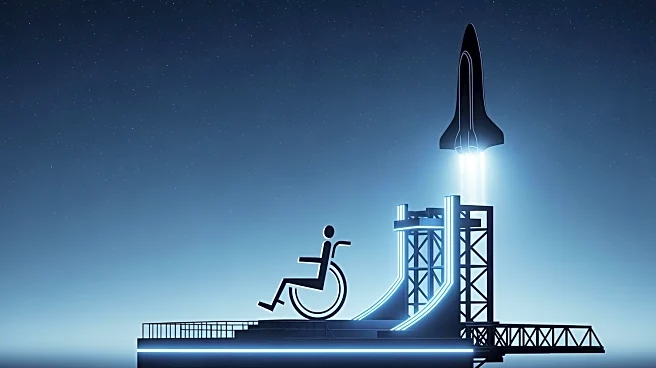
Blue Origin, the commercial space flight company founded by Jeff Bezos, has made history with its 37th flight of the New Shepard program. On December 20, 2025, Michaela (Michi) Benthaus, a 33-year-old aerospace engineer from the European Space Agency,
became the first person who uses a wheelchair to travel to space. Benthaus, who has been using a wheelchair since a spinal cord injury in 2018, joined five other passengers on the suborbital flight. The mission took the crew just above the Kármán Line, the boundary between Earth's atmosphere and outer space, marking a significant milestone in making space travel more inclusive. Blue Origin designed the flight with accessibility in mind, providing adaptations such as a special strap to secure Benthaus's legs in microgravity.
Why It's Important?
This event is significant as it highlights the growing inclusivity in space travel, demonstrating that individuals with disabilities can also participate in such groundbreaking experiences. Blue Origin's efforts to accommodate Benthaus underscore the importance of accessibility in all areas of society, including space exploration. This milestone could inspire other aerospace companies to consider similar adaptations, potentially opening up new opportunities for people with disabilities. The flight also serves as a reminder of the broader societal goal of inclusivity, encouraging industries to rethink accessibility in their operations and services.
What's Next?
Following this historic flight, there may be increased pressure on other space companies to enhance their accessibility measures. Blue Origin's success could lead to more inclusive policies and designs in future space missions. Additionally, this achievement might inspire more individuals with disabilities to pursue careers in aerospace and other STEM fields, knowing that barriers are being actively addressed. The positive response from figures like Jared Isaacman, the new NASA administrator, suggests that governmental space agencies might also prioritize inclusivity in their programs.
Beyond the Headlines
Beyond the immediate impact, this development could influence cultural perceptions of disability, challenging stereotypes and promoting a more inclusive view of who can participate in high-stakes, high-tech fields like space exploration. It also raises ethical considerations about the responsibility of private companies to lead in accessibility innovations. As space travel becomes more commercialized, the industry may face increased scrutiny regarding its commitment to inclusivity and diversity.