




What's Happening?
Senator Sheldon Whitehouse, the top Democrat on the Senate Committee on Environment and Public Works, has initiated an investigation into alleged financial mismanagement and cronyism at the Kennedy Center. This follows a letter from whistleblowers claiming
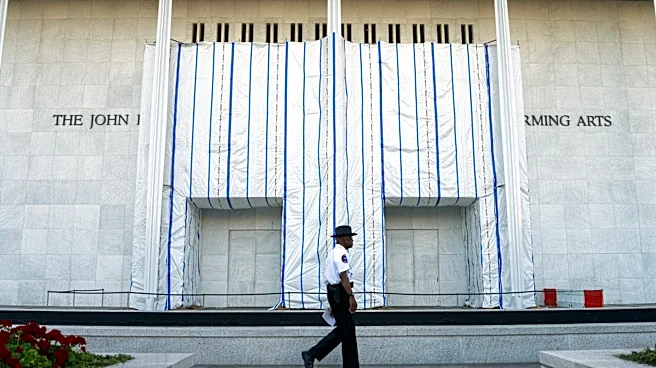
that the center's leadership, specifically executive director and chief operating officer Matt Floca, delayed crucial repairs despite known structural issues. The whistleblowers allege that Floca halted a funded plan to address roofing problems in April, even though Congress had earmarked $257 million for repairs in a 2025 tax cut and spending bill signed by President Trump. Senator Whitehouse stated that his initial investigation focused on cronyism and corruption, with documents indicating excessive and self-serving spending during President Trump's chairmanship. He now suggests that the new documents reveal deeper financial mismanagement. Floca, however, denies these allegations, asserting that the decision to reassign design plans was due to a contractor's quote being nearly three times the expected cost, and that recent investigations uncovered previously unknown damage.
Why It's Important?
This investigation is significant as it raises questions about the oversight and accountability of federally funded institutions, particularly those with high public profiles like the Kennedy Center. The allegations of financial mismanagement and cronyism could erode public trust in the administration of cultural institutions and the allocation of taxpayer money. If proven true, the claims of delayed repairs despite available funding could indicate a serious lapse in fiduciary responsibility, potentially endangering public safety and the structural integrity of a national landmark. Furthermore, the involvement of a high-ranking senator and the explicit mention of President Trump's chairmanship suggest a broader political dimension, potentially impacting future congressional appropriations and oversight of similar entities. The situation also highlights the ongoing tension between political appointees and career staff within government-affiliated organizations, and the role of whistleblowers in exposing potential misconduct.
What's Next?
The Senate Committee on Environment and Public Works, led by Senator Whitehouse, is expected to continue its investigation into the Kennedy Center's financial practices and repair delays. The Kennedy Center leadership is required to file a status report on the temporary closure and emergency repairs. Further scrutiny from Congress is likely, potentially leading to hearings, demands for additional documentation, and interviews with current and former Kennedy Center officials. Depending on the findings, there could be calls for changes in leadership, stricter financial oversight mechanisms, or even legal repercussions. The political implications could also escalate, especially if the investigation uncovers direct links to the previous administration's appointees or policies. The outcome of this investigation could set a precedent for how similar institutions are managed and held accountable for public funds.
Beyond the Headlines
Beyond the immediate concerns of financial mismanagement and delayed repairs, this situation touches upon the broader issue of political influence within cultural institutions. The allegations of cronyism and self-serving spending under President Trump's chairmanship suggest a potential politicization of an institution traditionally seen as non-partisan. This could lead to a re-evaluation of the appointment processes for governing boards of national cultural centers and the extent of political control over their operations. The case also underscores the critical role of whistleblowers in government oversight, highlighting the need for robust protections for individuals who come forward with information about potential misconduct. The long-term implications could include a push for greater transparency in the financial dealings of federally supported cultural organizations and a renewed focus on ensuring that such institutions serve their public mission without undue political interference or financial impropriety.