
What's Happening?
Israel has deployed its Iron Dome missile defense system to the United Arab Emirates (UAE) as part of a strategic military cooperation amid ongoing tensions with Iran. This deployment marks a significant
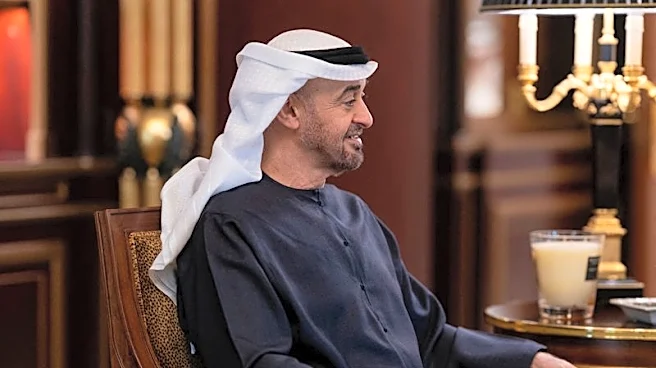
step in the deepening relationship between Israel and the UAE, which began normalizing ties in 2020 under the Abraham Accords. The decision to send the Iron Dome, along with Israeli soldiers to operate it, was made by Prime Minister Benjamin Netanyahu following a request from UAE President Sheikh Mohammed bin Zayed Al Nahyan. This move underscores the UAE's shift in alliances, distancing itself from traditional Arab partners due to their stance on the Iran war, and aligning more closely with Israel and Western nations like the United States, France, and the United Kingdom.
Why It's Important?
The deployment of the Iron Dome to the UAE highlights a significant realignment of Middle Eastern alliances, with Israel and the UAE strengthening ties in response to shared security threats from Iran. This cooperation not only enhances the UAE's defense capabilities but also signifies a broader geopolitical shift in the region. The UAE's decision to distance itself from traditional Gulf allies and its recent withdrawal from OPEC further illustrate its strategic pivot towards Israel and Western powers. This realignment could have lasting implications for regional stability and the balance of power in the Middle East, potentially influencing future diplomatic and military engagements.
What's Next?
As the UAE continues to reassess its regional alliances, further cooperation with Israel is likely, potentially expanding beyond military collaboration to include economic and technological partnerships. The UAE's departure from OPEC and its criticism of Arab states' responses to the Iran conflict suggest a willingness to redefine its role in the region. This evolving relationship with Israel may lead to increased Israeli influence in the Gulf, impacting regional dynamics and possibly prompting reactions from other Middle Eastern countries. The UAE's strategic decisions will be closely watched by global powers, as they could affect energy markets and international diplomatic efforts in the region.