






What's Happening?
The U.S. Department of Justice (DOJ) has filed a Notice of Appeal with the United States Court of Appeals for the Fifth Circuit, challenging what it terms a 'constructive Order denying' its request to intervene and dismiss a lawsuit filed by the NAACP.
The NAACP and NAACP Mississippi State Conference initiated a citizen suit against x.AI and MZX Tech LLC, alleging that x.AI installed and began operating 27 gas turbines for its Colossus II Data Center in Southaven, Mississippi, between August and December 2025 without the required Clean Air Act permit. The NAACP's complaint seeks a court order for x.AI to cease unpermitted operations, install best available control technology, and pay financial penalties. The DOJ's motion to intervene and dismiss, filed on June 15, argues that the U.S. government has the right to intervene in such citizen suits and to dismiss the enforcement action, citing Article II of the Constitution and asserting that the Clean Air Act does not authorize citizen enforcement actions seeking relief the government chooses to forego. The DOJ's appeal stems from the District Court's August 24 case management conference, where the court indicated it would likely decline the DOJ's motion, leading the DOJ to treat the absence of a written ruling as a 'constructive denial' for appeal purposes.
Why It's Important?
This legal battle carries significant implications for environmental regulation, corporate accountability, and the balance of power between citizen groups and the federal government in enforcing environmental laws. The NAACP's lawsuit highlights concerns about potential Clean Air Act violations by a major technology company, emphasizing the role of citizen suits in holding corporations accountable for environmental impact. The DOJ's intervention, however, raises fundamental questions about the scope of executive power in environmental enforcement and the limits of citizen-led actions. If the DOJ's argument prevails, it could set a precedent that curtails the ability of environmental and civil rights organizations to pursue legal action against alleged polluters when the federal government opts not to. This could weaken environmental protections and reduce public oversight of industrial operations. Conversely, if the NAACP's suit proceeds, it could reinforce the importance of citizen engagement in upholding environmental standards and ensuring that companies adhere to permitting requirements, particularly for large-scale industrial projects like data centers that consume substantial energy and generate emissions.
What's Next?
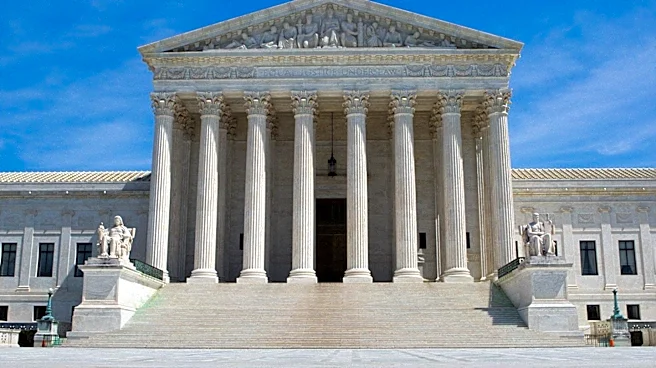
The U.S. Court of Appeals for the Fifth Circuit will now review the DOJ's appeal regarding the 'constructive denial' of its motion to intervene and dismiss the NAACP's lawsuit. The outcome of this appeal will determine whether the DOJ can successfully block the citizen suit against x.AI. If the Fifth Circuit sides with the DOJ, the NAACP's ability to pursue its claims against the data center could be significantly hampered or even terminated. If the Fifth Circuit rejects the DOJ's appeal, the case will likely return to the United States District Court for the Northern District of Mississippi, where the NAACP's request for a preliminary injunction and other remedies under the Clean Air Act would proceed. This legal process will involve further arguments from all parties, potentially leading to a trial or settlement. The decision will also be closely watched by other environmental advocacy groups and corporations, as it could influence future strategies for environmental enforcement and corporate compliance.
Beyond the Headlines
This case delves into the intricate legal and constitutional framework governing environmental protection in the U.S., particularly the interplay between federal enforcement agencies and citizen advocacy groups. The DOJ's argument, rooted in Article II executive power, suggests a preference for federal control over environmental enforcement, potentially limiting the avenues for public participation and oversight. This raises broader questions about democratic accountability in environmental governance and whether citizen suits are seen as complementary or contradictory to federal regulatory efforts. The rapid expansion of data centers, like x.AI's Colossus II, also brings to the forefront the environmental footprint of the technology sector, particularly its energy consumption and emissions. This case could influence how future large-scale tech infrastructure projects are permitted and regulated, potentially leading to increased scrutiny of their environmental impact. The ethical dimension involves balancing technological advancement and economic development with environmental stewardship and community health, especially in areas like Southaven where such facilities are being rapidly deployed.