



What's Happening?
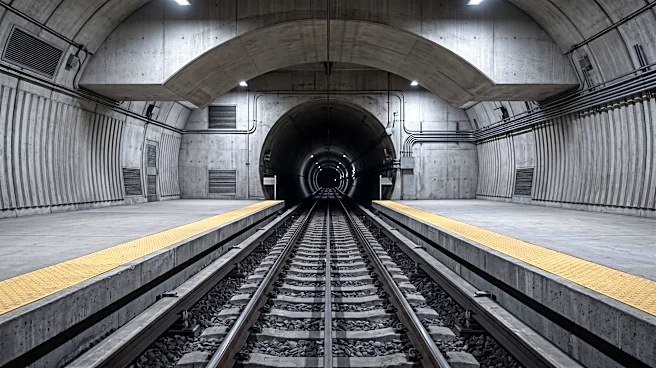
An MTA construction flagger, Moet McCullum, 41, was fatally struck by a southbound D train near the 161 Street-Yankee Stadium station in the Bronx on Thursday night. This incident marks the second death of a flagger with limited experience since 2023,
following the death of Hilarion Joseph, 57, who was also struck by a D train. According to an internal report, McCullum's supervisor observed the train approaching and blew a whistle to clear the tracks, but McCullum 'froze.' The train operator reportedly told an MTA official that he had been warned about flaggers but did not see any warning lights, leading him to operate the train at normal speed. New York City Transit president Demetrius Crichlow expressed condolences, acknowledging the loss of an MTA family member. In response, the MTA has temporarily pulled all construction flaggers off the tracks for 24 hours for safety retraining. The National Transportation Safety Board (NTSB) is launching an investigation into the incident.
Why It's Important?
This tragic event highlights persistent safety concerns within the MTA, particularly for track workers. The fact that this is the second such fatality involving an inexperienced flagger since 2023 underscores a potential systemic issue in training, safety protocols, or communication. The Federal Transit Administration (FTA) had previously issued directives to New York state’s Public Transportation Safety Board, urging the MTA to enhance its safety protocols after numerous 'near-miss' events in 2023 where employees were at risk of being struck by trains. The immediate decision to retrain all construction flaggers indicates a recognition of urgent safety deficiencies. This incident could lead to more stringent federal oversight, revised operational procedures, and potentially increased investment in advanced warning systems or alternative safety measures to protect track workers. The Transport Workers Union Local 100, representing MTA flaggers, will likely advocate for stronger protections and accountability, impacting labor relations and worker safety standards across the transit system.
What's Next?
The National Transportation Safety Board (NTSB) will conduct a thorough investigation into the incident, which will likely involve examining communication protocols, training procedures, track safety measures, and the actions of both the flagger and the train operator. The MTA's 24-hour retraining for all construction flaggers is an immediate step, but further long-term changes to safety protocols are anticipated. This could include implementing new technologies for track worker protection, revising training curricula, or altering operational speeds in work zones. The Federal Transit Administration (FTA) may issue additional directives or impose penalties if systemic safety failures are identified. There will likely be increased scrutiny from the public, media, and labor unions, potentially leading to calls for greater accountability from MTA leadership and New York City Transit. The outcome of the NTSB investigation and subsequent actions by the MTA and regulatory bodies will determine the future of track worker safety in the New York City subway system.
Beyond the Headlines
The recurring nature of these incidents raises deeper questions about the balance between operational efficiency and worker safety within large transit systems like the MTA. The internal report suggesting the flagger 'froze' and the train operator's claim of not seeing warning lights point to potential human factors and communication breakdowns that go beyond simple procedural errors. This could indicate a need for more robust psychological preparedness training for high-stress environments, or a re-evaluation of the effectiveness of current warning systems. The incident also highlights the inherent dangers faced by essential infrastructure workers, often operating in high-risk environments. The broader societal implication is the ethical responsibility of public transportation agencies to ensure the utmost safety for their employees, especially when federal directives have already flagged existing issues. This tragedy may prompt a re-examination of how 'near-miss' data is utilized to prevent future fatalities and whether current safety cultures adequately prioritize human life over operational schedules.