


What's Happening?
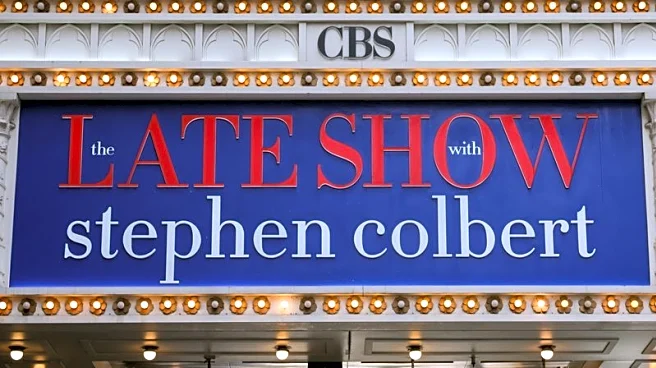
The Federal Communications Commission (FCC) has issued guidance that challenges the assumption that late-night and daytime talk shows qualify for the 'bona fide news' exemption under the equal time rule. This guidance, strongly advocated by FCC Chair
Brendan Carr, has led broadcasters to reconsider their approach to political interviews. The equal time rule requires broadcasters to offer comparable airtime to opposing political candidates, a requirement that does not apply to cable, streaming services, or social media. The guidance has sparked concerns among civil liberties advocates about potential impacts on free speech and media freedom.
Why It's Important?
The FCC's guidance could significantly impact how broadcasters handle political content, potentially leading to a shift away from traditional broadcast platforms to avoid equal time obligations. This could reduce the availability of political discourse on television, as networks may become more cautious in booking political candidates. The situation highlights the ongoing tension between regulatory compliance and media freedom, with implications for how political content is managed across different platforms. The guidance also raises questions about the role of regulatory bodies in shaping media coverage of political candidates.
What's Next?
Broadcasters may increasingly turn to non-broadcast platforms, such as online streaming services, to feature political content without triggering equal time obligations. This shift could alter the landscape of political discourse, as networks seek to avoid regulatory scrutiny. The situation may also lead to legal challenges from media outlets or political figures, questioning the FCC's interpretation of the rule. As the FCC continues to enforce the rule, broadcasters will need to navigate the complexities of political content regulation, balancing compliance with editorial independence.