





What's Happening?
U.S. Senator Roger Marshall has attributed the recent outbreak of the New World screwworm, a parasite affecting cattle, to former President Joe Biden's immigration policies. The screwworm cases, the first in the U.S. in sixty years, have been detected
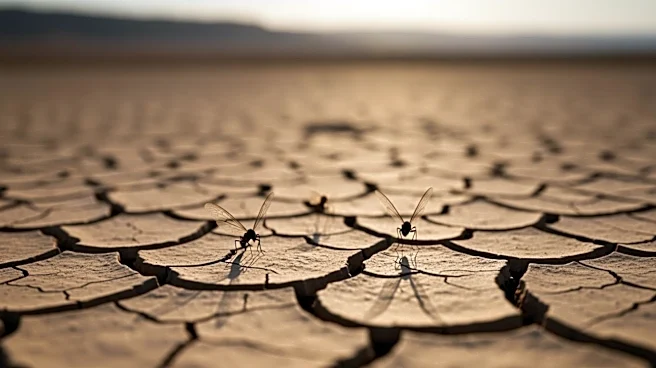
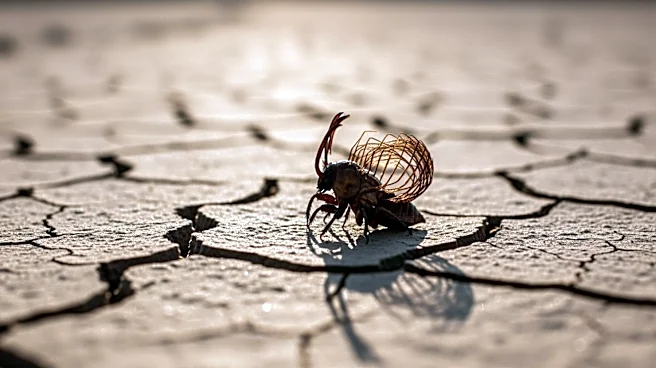
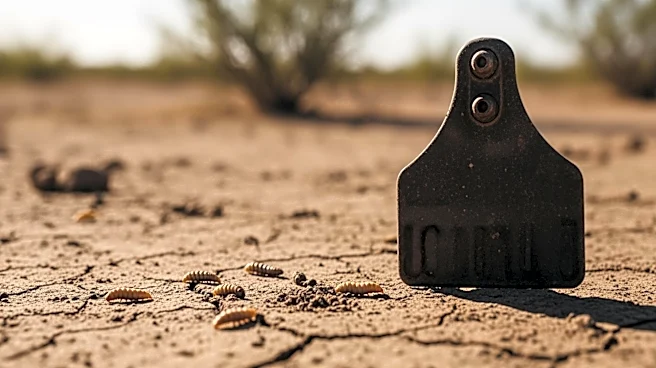
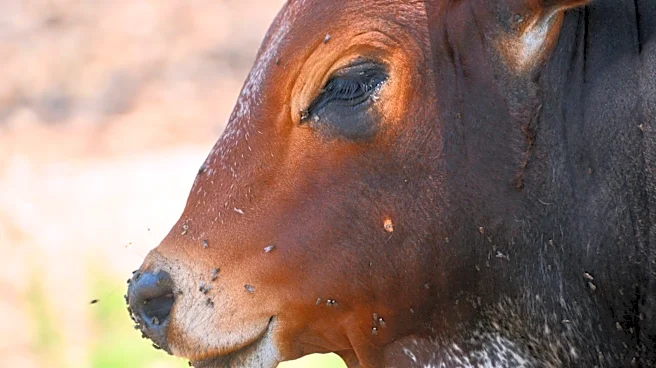
in Texas and New Mexico. Marshall, a Republican from Kansas, made these claims during an appearance on Newsmax, a right-wing cable channel. He suggested that the influx of immigrants from Central America, allegedly carrying the parasite, is responsible for the outbreak. Critics have pointed out that Marshall supported budget cuts that may have weakened the USDA's ability to protect livestock. The screwworm is a flesh-eating parasite that poses a significant threat to cattle, potentially leading to severe economic impacts for ranchers.
Why It's Important?
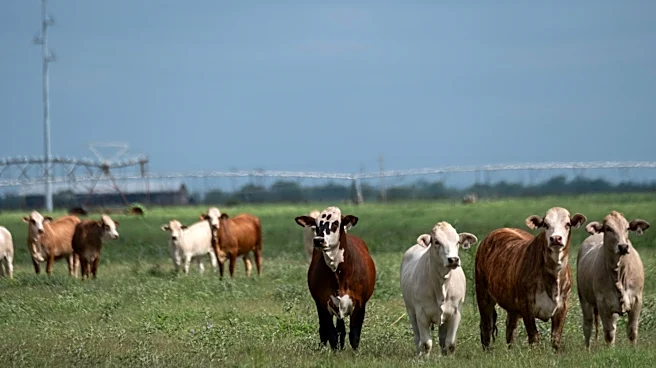
The screwworm outbreak has significant implications for the U.S. livestock industry, particularly in Texas and New Mexico, where the cases have been reported. The parasite can cause severe damage to cattle, leading to economic losses for ranchers. Senator Marshall's comments highlight the ongoing political debate over immigration policies and their impact on public health and agriculture. The situation underscores the need for effective border control measures and robust agricultural protections to prevent the spread of such parasites. Additionally, the criticism of Marshall's past support for budget cuts raises questions about the adequacy of current resources allocated to the USDA for livestock protection.
What's Next?
The USDA and other relevant authorities are likely to increase monitoring and control measures to prevent further spread of the screwworm. There may be calls for additional funding and resources to strengthen the USDA's capabilities in managing such outbreaks. Politically, the issue could become a point of contention in upcoming elections, with immigration policies and agricultural protections being key topics of debate. Stakeholders, including ranchers and agricultural organizations, may advocate for more comprehensive strategies to safeguard livestock from similar threats in the future.