






What's Happening?
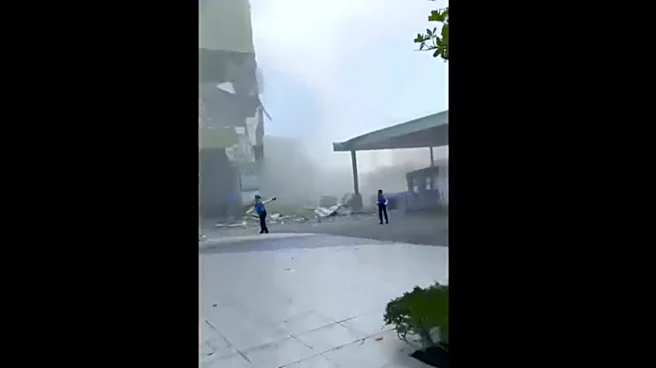
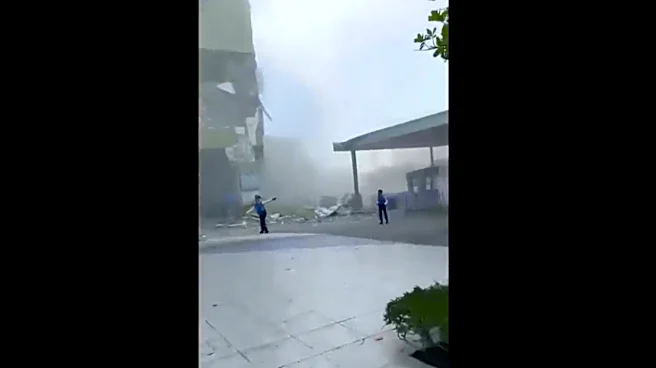
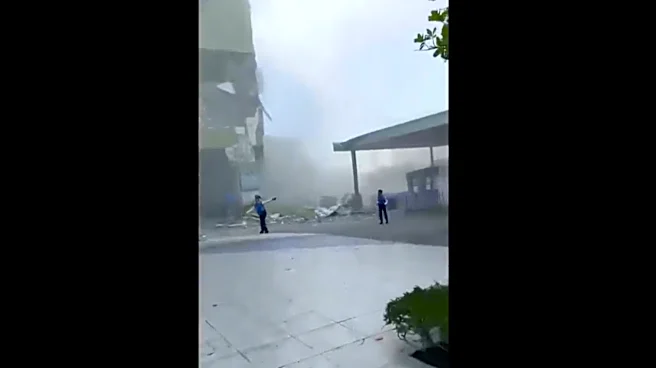
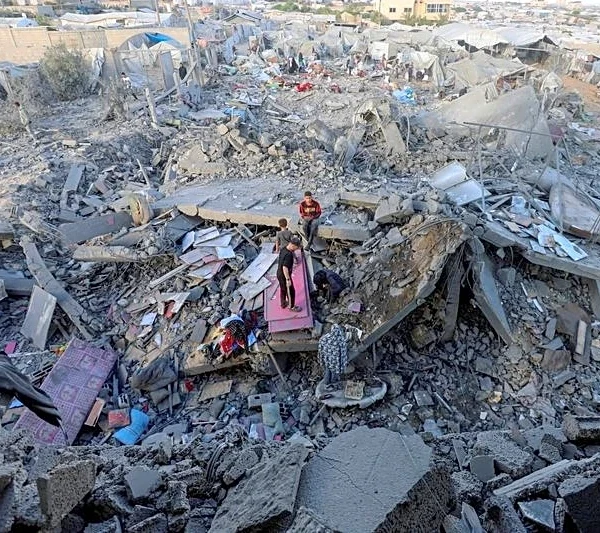
A magnitude 7.8 earthquake struck the southern Philippines, resulting in at least 32 fatalities and over 200 injuries. The earthquake, which occurred offshore, caused significant damage to buildings and infrastructure, particularly in the city of General
Santos. A tsunami with waves reaching up to 1 meter was reported, affecting coastal areas. The quake also triggered a landslide in Sarangani province, leading to additional casualties. The Philippine Institute of Volcanology and Seismology has warned residents to be cautious of aftershocks and to avoid damaged structures. The earthquake's epicenter was located at a depth of 33 kilometers, southwest of Maasim town in Sarangani province.
Why It's Important?
The earthquake highlights the vulnerability of the Philippines to natural disasters, given its location on the Pacific 'Ring of Fire.' The immediate impact includes loss of life, injuries, and displacement of residents, with significant damage to infrastructure affecting local economies and daily life. The tuna export industry in General Santos, a regional hub, may face disruptions. The event underscores the need for robust disaster preparedness and response strategies in the region. The potential for aftershocks and further damage remains a concern for local authorities and residents.
What's Next?
Philippine President Ferdinand Marcos Jr. has ordered disaster-response agencies to prioritize aid and recovery efforts in the affected areas. The national government is coordinating with local officials to assess the full extent of the damage and provide necessary support. The Pacific Tsunami Warning Center has lifted the tsunami threat, but monitoring for aftershocks continues. Efforts are underway to restore normalcy, including reopening the temporarily closed General Santos airport and resuming canceled flights. Long-term recovery will involve rebuilding infrastructure and providing support to displaced communities.