




What's Happening?
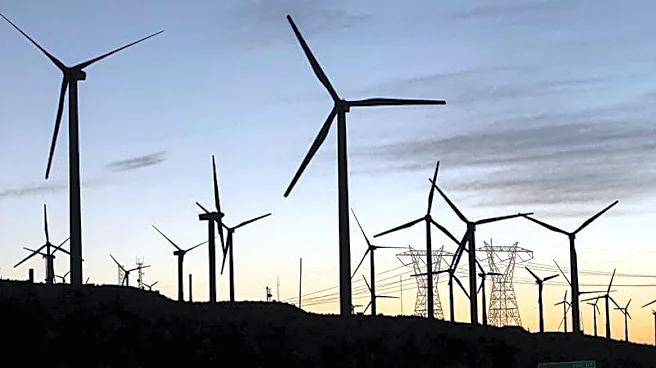
Europe's offshore wind sector is experiencing significant price increases for wind turbines, with costs rising by 40% to 45% since 2020. This surge is attributed to a concentrated supplier market and increased turbine complexity. GE Vernova, Siemens Gamesa,
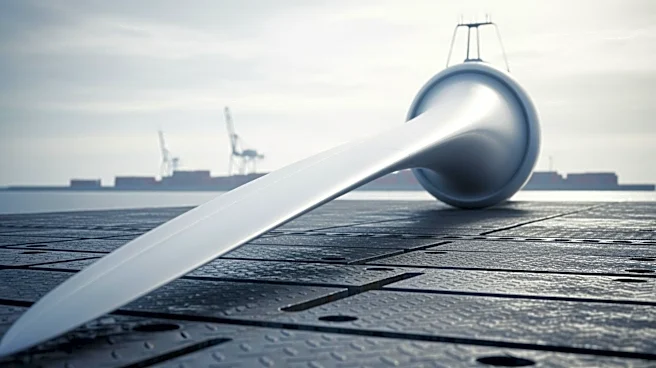
and Vestas dominate the market, but GE Vernova has paused new orders due to technical setbacks, leaving Siemens Gamesa and Vestas as the primary suppliers. The supply constraints are most acute in the production of nacelles and blades, critical components of wind turbines. The market's shift towards larger and more complex turbines has further exacerbated these constraints, impacting the balance between supply and demand.
Why It's Important?
The rising costs and supply constraints in Europe's offshore wind market have significant implications for the global energy transition. As Europe aims to meet its post-2030 renewable energy targets, the current market dynamics could hinder progress. The increased pricing power of original equipment manufacturers (OEMs) may lead to higher project costs, affecting developers and potentially slowing down the deployment of renewable energy projects. This situation underscores the need for expanded manufacturing capacity and strategic adjustments in auction frameworks to ensure the energy transition remains on track.
What's Next?
To address these challenges, Europe may need to expand its manufacturing capacity and reconsider its approach to supply constraints in auction frameworks. Without these adjustments, achieving post-2030 renewable energy targets could become more difficult and costly. The ongoing geopolitical uncertainties, such as conflicts in the Middle East, add further complexity to the situation, potentially influencing future energy policies and market dynamics.