
What's Happening?
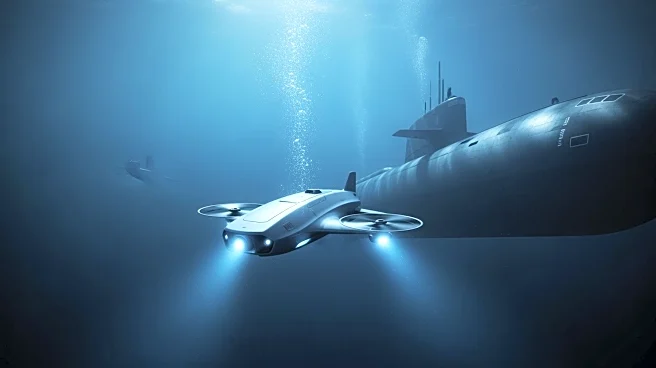
Ukraine's Security Service (SBU) has disclosed details of a significant underwater drone strike that disabled a Russian submarine. The operation involved the 'Sub Sea Baby' underwater drone, which successfully
targeted a Russian Kilo-class submarine in the Novorossiysk port. The strike was facilitated by a prior attack on a Russian Il-38N reconnaissance aircraft, known as the 'Sea Dragon,' at the Yeysk air base. This aircraft, valued at approximately $24 million, was actively countering Ukrainian naval drones and was the only one in the Black Sea capable of detecting the underwater drone. The SBU used a drone equipped with an airburst warhead to disable the aircraft, ensuring the success of the submarine strike.
Why It's Important?
This development highlights Ukraine's strategic use of drone technology in its ongoing conflict with Russia. By disabling the Russian reconnaissance aircraft, Ukraine was able to carry out a successful strike on a high-value military target, demonstrating its capability to challenge Russian military assets. The operation underscores the evolving nature of warfare, where low-cost drones can effectively counter sophisticated military equipment. This could influence future military strategies and defense policies, as nations may invest more in drone technology for surveillance and combat operations. The strike also exposes vulnerabilities in Russia's military defenses, potentially impacting its strategic planning and resource allocation.
What's Next?
The successful strike may prompt Russia to reassess its military strategies and enhance its defenses against drone attacks. Ukraine's continued use of drone technology could lead to further engagements, potentially escalating the conflict. Both nations might increase their investment in counter-drone technologies and tactics. Internationally, this event could influence other countries to explore similar technologies, altering global military dynamics. The SBU's actions may also lead to increased scrutiny and strategic adjustments by other military powers observing the conflict.
Beyond the Headlines
The use of drones in military operations raises ethical and legal questions regarding warfare conduct. The ability to strike high-value targets with minimal human intervention challenges traditional military engagement norms. This could lead to discussions on international regulations governing drone warfare and the implications for civilian safety. Additionally, the reliance on technology in warfare may shift military training and resource allocation, emphasizing cyber capabilities and technological innovation over conventional forces.