







What's Happening?
A grand jury in Ohio has refused to bring felony charges against Cody Morelock, a Clermont County man accused of destroying a Flock automatic license plate reader (ALPR). In June, Morelock was arrested by police in Union Township, a Cincinnati suburb,
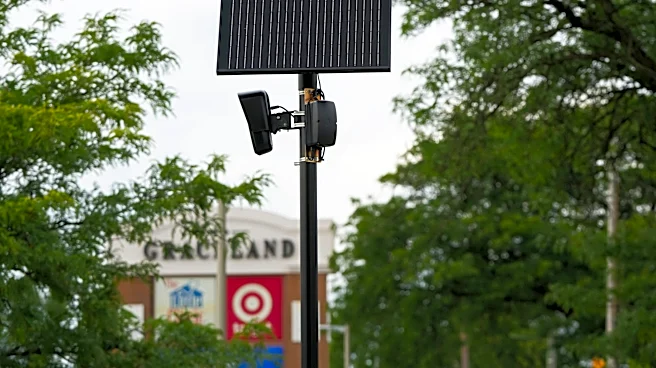
after being accused of removing bolts from an ALPR pole, causing it to topple and destroy the surveillance camera and its solar panel. The prosecution presented evidence including surveillance footage from multiple nearby cameras and information from a credit card and customer rewards account, which reportedly identified Morelock. Despite what appeared to be strong evidence, the grand jury declined to indict Morelock, leading to all charges being dropped. This outcome is notable given the general expectation that prosecutors can typically secure indictments from grand juries.
Why It's Important?
This decision by the Ohio grand jury highlights growing public sentiment and resistance against pervasive surveillance technologies, particularly ALPRs like those deployed by Flock Safety. The refusal to indict, despite seemingly clear evidence, suggests a significant level of public disapproval of these systems, even extending to actions against them. This case could embolden others who oppose surveillance technology, potentially leading to more instances of vandalism or legal challenges against their deployment. For companies like Flock Safety, this outcome underscores the reputational challenges they face and the public's demand for greater privacy and accountability regarding data collection. It also signals a potential shift in how communities and legal systems might respond to incidents involving damage to surveillance infrastructure, reflecting broader societal debates about privacy versus security.
What's Next?
The dropping of charges against Cody Morelock could influence future legal proceedings involving damage to surveillance equipment, potentially making it more difficult for prosecutors to secure convictions in similar cases. This event may also prompt increased public discourse and activism against the expansion of surveillance networks, potentially leading to more organized efforts to challenge the legality or ethical implications of ALPRs and other monitoring technologies. Law enforcement agencies and companies like Flock Safety might need to re-evaluate their strategies for deploying and maintaining these systems, possibly by implementing more robust community engagement or by addressing privacy concerns more directly. The incident could also lead to calls for clearer regulatory frameworks governing the use of surveillance technology to balance public safety with individual privacy rights.
Beyond the Headlines
The grand jury's decision goes beyond a simple legal outcome; it serves as a powerful referendum on the public's perception of surveillance technology in the United States. The widespread unpopularity of Flock ALPRs across the political spectrum suggests a deep-seated concern about privacy and the potential for a 'surveillance state.' This case illustrates how public opinion can influence the legal process, even in situations where evidence appears conclusive. It also highlights the tension between technological advancements in security and fundamental civil liberties. The phenomenon of public support for individuals who act against surveillance infrastructure, previously observed in viral social media moments, is now manifesting in real-world legal outcomes, indicating a significant cultural shift regarding the acceptance of pervasive monitoring.