







What's Happening?
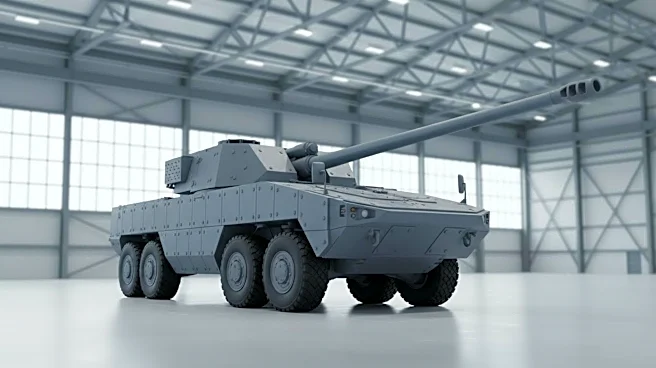
The U.S. Army has selected Hanwha Defense USA to proceed with the next phase of its Mobile Tactical Cannon (MTC) program. Hanwha Defense USA will provide prototypes of its wheeled 155mm K9 Mobile Howitzer for testing, with the potential to replace the Army’s
current towed 155mm M777 howitzers. The agreement, valued at $100,302,961 with a total cumulative face value of $262,903,274, involves the accelerated delivery of six prototype MTC systems, with an option for an additional 12. These systems will undergo operational experiments over an estimated four-year period to assess performance, reliability, and supportability in realistic combat conditions. BAE Systems, along with American Rheinmetall, General Dynamics Land Systems, and Elbit Systems USA, were also in the running for this contract but were not selected for the prototype phase. The K9MH, developed from Hanwha’s tracked K9 design, boasts a 52-caliber 155mm cannon and a maximum range of over 37 miles (60 kilometers), significantly exceeding the M777's range.
Why It's Important?
This decision marks a significant step in the U.S. Army's continuous transformation and long-range fires modernization efforts, aiming to enhance the lethality, mobility, reliability, and survivability of its artillery systems. The adoption of a wheeled self-propelled howitzer like the K9MH would provide integrated mobility, allowing for faster deployment and 'shoot and scoot' tactics, which are crucial in modern warfare characterized by drone surveillance and expanded kill chains. The M777, being a towed system, requires a separate vehicle for movement, making it less agile. This contract also represents a major win for South Korea's defense industry, further solidifying its global export gains and potentially opening a significant pathway into the American defense market for Hanwha. For BAE Systems and other competitors, this signifies a missed opportunity in a key U.S. defense modernization program, potentially impacting their market share and future defense contracts within the U.S.
What's Next?
Hanwha Defense USA will proceed with the accelerated delivery of six prototype K9 Mobile Howitzer systems to the U.S. Army, with an option for an additional 12. These prototypes will be used by soldiers in a series of operational experiments over the next four years to evaluate their performance, reliability, and supportability in realistic combat scenarios. The data and insights gathered from these experiments will directly inform senior leaders' decisions regarding future fielding. If approved, the MTC systems are intended to replace M777 towed artillery systems in select formations, with an initial focus on Brigade Combat Teams equipped with Stryker wheeled light armored vehicles. The Army's selection of Hanwha Defense USA for this phase does not guarantee the K9MH's final adoption, as further testing and evaluation are required before a full fielding decision is made.
Beyond the Headlines
The U.S. Army's move towards wheeled self-propelled howitzers reflects a broader strategic shift in military doctrine, emphasizing agility and rapid response in multi-domain operations. The ongoing conflict in Ukraine has underscored the critical importance of artillery and the need for highly mobile systems that can quickly relocate to avoid counter-battery fire. This decision also highlights the increasing global competitiveness in the defense industry, with South Korean manufacturers like Hanwha making significant inroads into markets traditionally dominated by Western defense contractors. The emphasis on 'Soldier-centric, experiment-driven' approaches signifies a commitment to integrating user feedback early in the development cycle, aiming to deliver capabilities that are truly effective and adaptable to evolving threats. This could set a precedent for future defense procurement strategies, prioritizing rapid prototyping and real-world testing over lengthy development cycles.