






What's Happening?
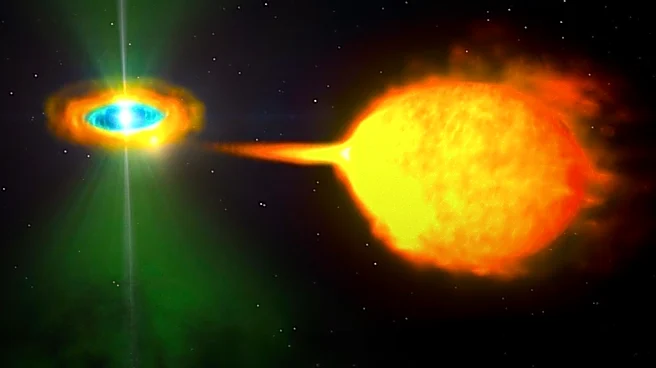
Astronomers have made a significant breakthrough by detecting what could be the first plausible exomoon using the radial-velocity method. This discovery was made in the CD-35 2722 system, where a brown dwarf exhibited a wobble indicative of an orbiting
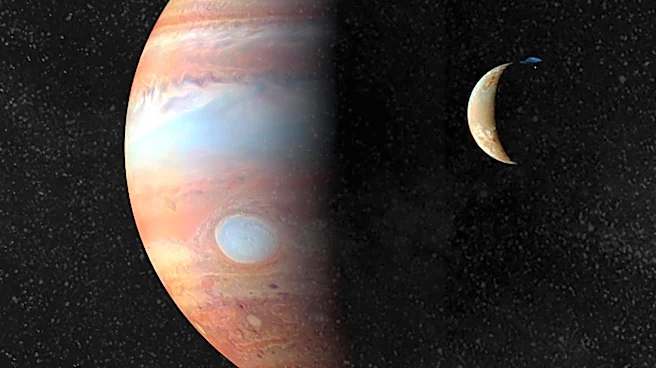
body. The object, with a mass close to Jupiter's, challenges traditional definitions of a moon, as it orbits a brown dwarf rather than a planet. This detection marks a milestone in astronomical research, as finding exomoons has proven more challenging than initially expected due to their small size and dimness compared to their host bodies.
Why It's Important?
The detection of an exomoon is a pivotal moment in the field of astronomy, expanding our understanding of celestial bodies beyond our solar system. This discovery could lead to new insights into the formation and evolution of planetary systems, as well as the potential for life on other moons. The use of the radial-velocity method to detect such a small and faint object demonstrates the advancements in astronomical technology and methodology. This could pave the way for future discoveries of similar bodies, enhancing our knowledge of the universe's complexity and diversity.
What's Next?
Further observations and studies are needed to confirm the nature of the detected object and its classification as an exomoon. Continued monitoring of the CD-35 2722 system will help determine the object's orbital characteristics and refine its mass estimates. This discovery may prompt the development of more sensitive instruments and techniques to detect smaller and fainter exomoons around other celestial bodies. The findings could also stimulate discussions within the scientific community about the definitions and classifications of moons and planets in diverse planetary systems.