


What's Happening?
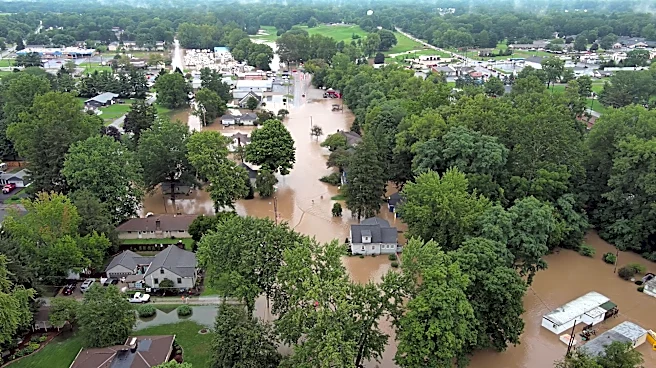
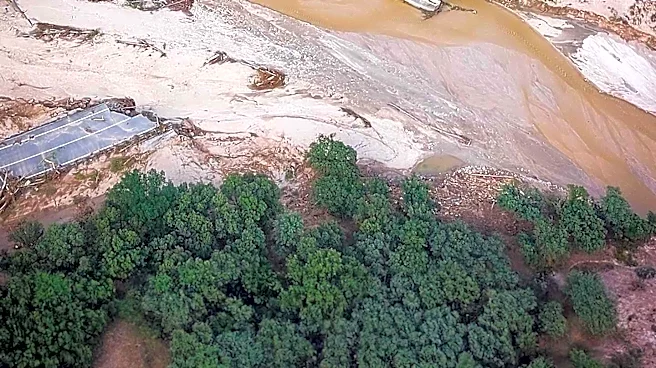
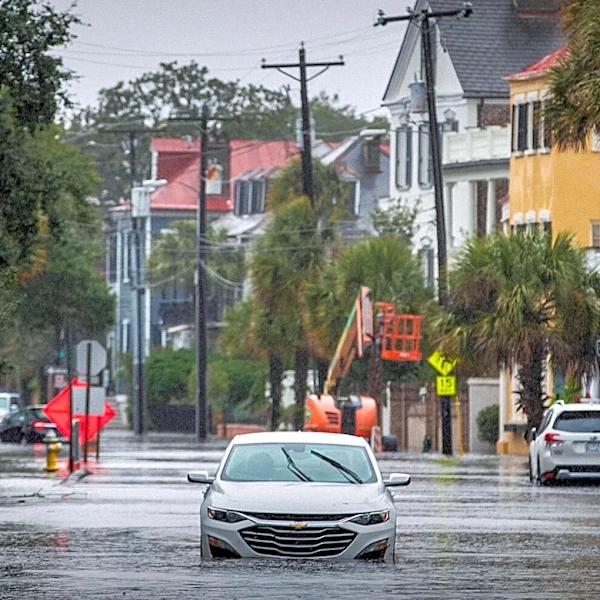
Multiple roads in Greene County, Ohio, remain closed following heavy rainfall that caused significant flooding and damage. A notable closure is a portion of Darst Road in Beavercreek, where floodwaters washed away a substantial section of the road, estimated
to be between 100 to 200 feet long. Crews have marked the damaged area with 'Danger' warnings. Repair efforts are pending favorable weather conditions, with work not expected to begin until the following week. The City of Beavercreek reported that they were fortunate the road did not completely collapse and that no injuries were sustained. Additionally, State Route 725, between Penewit Road and Lower Bellbrook Road, is also closed as authorities assess the damage and formulate a repair plan. Residents are advised to avoid these areas until repairs are completed.
Why It's Important?
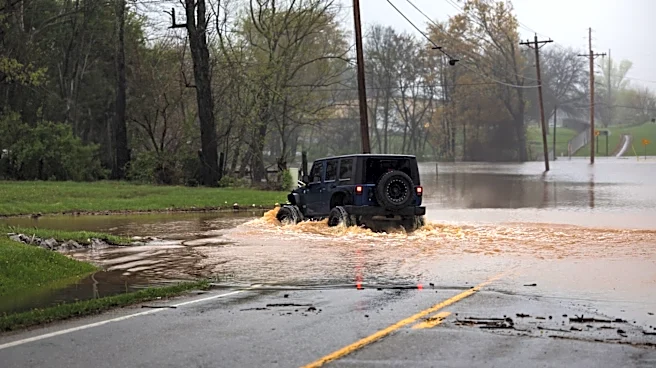
The extensive road closures in Greene County highlight the immediate and disruptive impact of severe weather events on local infrastructure and daily life. The damage to Darst Road, where the underlying soil was washed away, underscores the vulnerability of road foundations to heavy rainfall and flooding. Such incidents can severely impede transportation, affecting commuters, emergency services, and local businesses. The warning from Beavercreek Township Fire Captain Andrew Brewer about the dangers of driving through standing water emphasizes critical public safety concerns, as even shallow water can cause vehicles to become stranded. The need for significant repair work also implies a financial burden on local authorities and potential long-term disruptions for residents. This situation serves as a reminder of the importance of robust infrastructure and effective disaster preparedness in mitigating the consequences of extreme weather.
What's Next?
Repair work on the damaged sections of Darst Road and State Route 725 is anticipated to commence next week, contingent on improved weather conditions. Local authorities will continue to assess the full extent of the damage and develop comprehensive repair plans. Residents should expect ongoing road closures and plan alternative routes for their commutes. Public safety campaigns may be reinforced to educate drivers on the hazards of flooded roads. In the longer term, this event could prompt a review of local infrastructure resilience to extreme weather, potentially leading to investments in drainage improvements, road reinforcement, and early warning systems to prevent similar disruptions in the future. The focus will be on restoring normal traffic flow and ensuring the safety of the affected roadways.
Beyond the Headlines
The flooding in Greene County, while a localized event, reflects broader challenges faced by communities across the U.S. in adapting to changing weather patterns and the increasing frequency of extreme rainfall events. The vulnerability of infrastructure, particularly older road systems, to such conditions raises questions about the adequacy of current maintenance and construction standards. This incident could spark discussions on the need for 'climate-resilient' infrastructure, which involves designing and building systems that can withstand more intense and unpredictable weather. Furthermore, the emphasis on public safety during flooding events highlights the importance of community awareness and preparedness. The economic impact, though not explicitly detailed, can include costs for repairs, lost productivity due to traffic disruptions, and potential impacts on local businesses, underscoring the multifaceted consequences of such natural disasters.