
What's Happening?
Ukraine's armed forces have conducted a strike on a liquefied petroleum gas (LPG) export terminal at the Russian port of Temryuk, located on the Sea of Azov. This terminal, known as the Maktren-Nafta LPG terminal, is capable
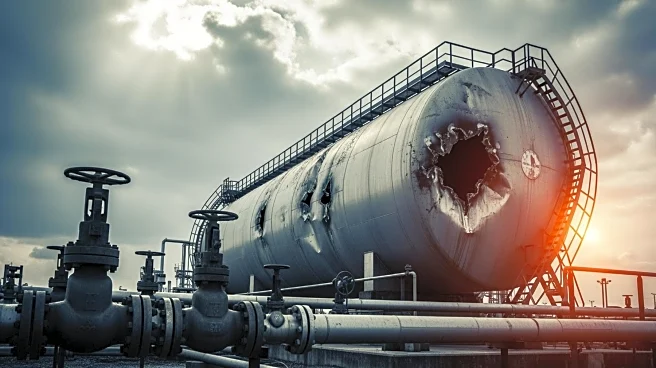
of moving 400,000 tonnes of gas annually and was constructed by the Ukrainian contractor Ukrgazproekt before the onset of the war. The attack, which took place on December 5, resulted in the destruction of 20 out of 30 storage tanks, significantly impacting the terminal's storage capacity. The fire caused by the strike reportedly burned for three days, although the full extent of the damage has not been independently verified. This incident marks another instance of Ukraine targeting the port, following a similar attack in May 2024.
Why It's Important?
The attack on the Temryuk LPG terminal is significant as it potentially disrupts Russian petroleum export revenues, which are crucial for the country's economy. The destruction of two-thirds of the terminal's storage capacity could lead to a temporary reduction in Russia's ability to export LPG, affecting global energy markets and possibly leading to increased energy prices. This development also underscores the ongoing tensions and hostilities between Ukraine and Russia, highlighting the strategic importance of energy infrastructure in the conflict. The incident may further strain international relations and impact diplomatic efforts aimed at resolving the conflict.
What's Next?
The immediate consequence of the attack is the potential need for Russia to repair the damaged infrastructure to restore its export capabilities. This may involve significant financial and logistical efforts. Additionally, the attack could prompt Russia to enhance security measures at its energy facilities to prevent future incidents. On the diplomatic front, the strike may influence ongoing negotiations and international support dynamics, as Ukraine continues to seek backing from global allies. The situation could also lead to increased military responses or retaliatory actions from Russia, further escalating the conflict.
Beyond the Headlines
The attack on the Temryuk terminal highlights the broader implications of energy security in geopolitical conflicts. It raises questions about the vulnerability of critical infrastructure in conflict zones and the potential for such incidents to disrupt global supply chains. The situation also reflects the complex interplay between military actions and economic consequences, as nations leverage strategic assets to gain advantages in conflicts. Furthermore, the incident may influence future energy policies and international cooperation efforts aimed at safeguarding energy infrastructure from similar threats.